

Philadelphia possesses a dual cultural heritage. It is the cradle of democracy, yet simultaneously an historic symbol of an unparalleled aristocratic elite. This second, elitist myth was brilliantly and permanently cemented in the minds of millions thanks to the classic Hollywood film The Philadelphia Story, released in 1940.
This romantic comedy, which brought a trio of Golden Age stars to the screen, turned Philadelphia into a synonym for sophistication, luxury, and intellectual brilliance. The film is set in high society, among wealthy Quaker families, and showcases the ideal of American aristocracy to the public. How did this cinematic masterpiece shape the international perception of the Philadelphia elite, and why does its name still evoke associations with unattainable elegance today? Read on for details at philadelphiaski.com.
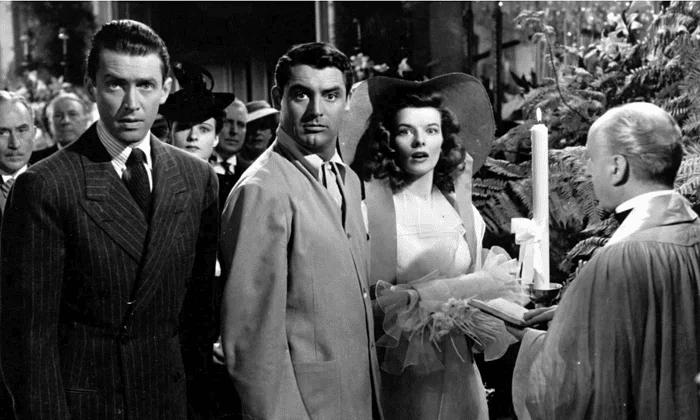
The Birth of a Hit
Before becoming a cinematic masterpiece, The Philadelphia Story was a successful play written by Philip Barry. The role of the brilliant but emotionally aloof heiress, Tracy Lord, was created specifically for Katharine Hepburn, who at the time had been labeled “box office poison” in Hollywood. Eager to rebuild her acting reputation, Hepburn took a risk. She bought the film rights to the play and sold them to MGM Studios on the condition that she would play the lead role and have the right to veto the casting. This clever maneuver secured her return to the top. The screenplay, witty and intelligent, was perfectly suited for creating a romantic comedy of the highest caliber.
The Golden Cage of Local Aristocracy
The film is set entirely in the fictional yet easily recognizable environment of the “Philadelphia Main Line.” This is more than just a geographic term. It describes a string of wealthy suburbs west of the city. These areas historically run along the old Pennsylvania Railroad line.
These districts were settled by the oldest and richest Philadelphia families. They formed a very closed aristocratic class known for its reserve and restraint.
In the film, this setting is depicted as a true oasis of the old world. It showcases a restrained, inherited luxury that requires no outward showiness. Life here adheres to a strict etiquette that, however, often masks the internal passions and personal dramas of the characters. The film contrasts this old aristocracy with the new energy and cynicism of journalism.
The movie not only captured this social myth in time but also spread it across the world. It turned the image of the “Philadelphia aristocrat” into a universal symbol of the American elite—a mark of a class that values tradition above all else.
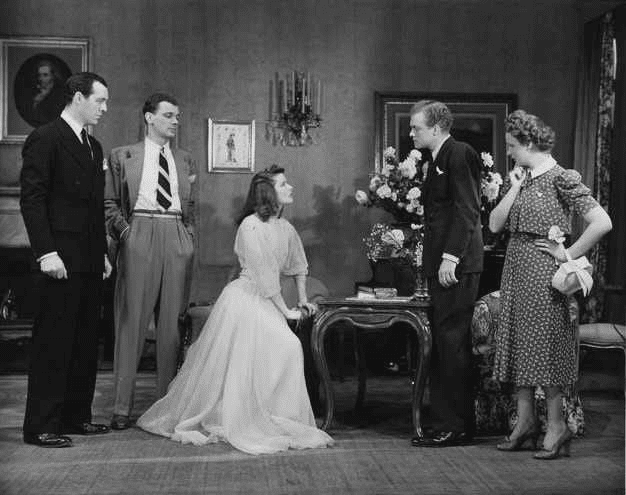
The Psychological Duet
The core intrigue of the work revolves around the return of two men into Tracy Lord’s life on the eve of her second wedding. Cary Grant plays her ex-husband, Dexter—a representative of the Main Line who embodies Tracy’s inner world. James Stewart, who won his only Oscar for this role, plays the journalist Mike Connor, who infiltrates the wedding, embodying the outside world and criticism.
This clash is not just a love triangle; it’s a psychological conflict within the heroine herself.
- Dexter accuses her of “cold perfection” and a lack of humanity.
- Mike forces her to experience genuine feelings that shatter her aristocratic barriers.
Ultimately, Tracy’s metamorphosis—her transition from an ice goddess to a living woman—is the main theme that made the plot so appealing.
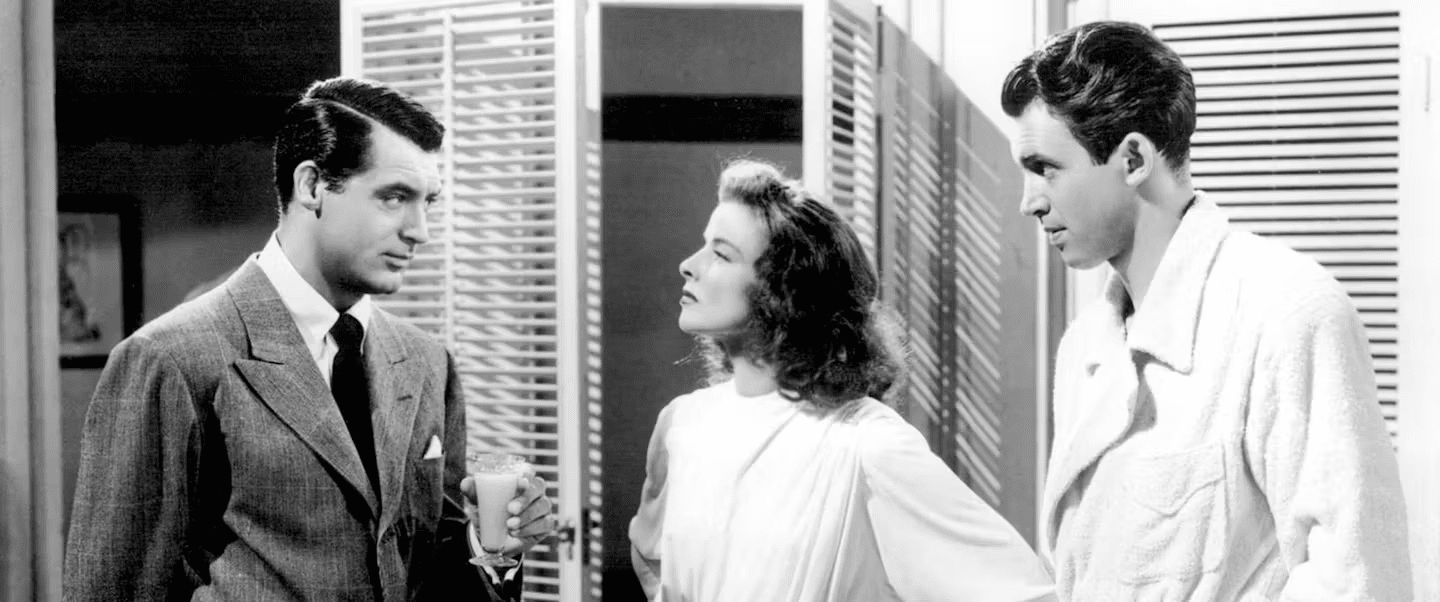
The Pinnacle of Stardom
The film went down in history not only for its plot but also as a benchmark for acting and an example of ideal casting. Producers managed to assemble a cast that was a true stellar triumvirate: Katharine Hepburn, Cary Grant, and James Stewart.
The movie’s success was, above all, a personal triumph for Katharine Hepburn. Her performance as the capricious but charming aristocrat was so convincing and brilliant that audiences once again believed in her star status. This role did not just revive her career; it made her an immortal screen icon.
The outstanding cast not only secured the film’s colossal commercial success, which was rare for such a “talky” genre. Their shared chemistry and interaction transformed the movie into a cinematic relic and a model of Hollywood “comedy of manners.” The film won two Oscars, definitively cementing its status as an enduring classic.
Cultural Imprint
The influence of The Philadelphia Story extended far beyond film critics. The movie created a template for later Hollywood romantic comedies where a rich but lonely woman finds happiness through an emotional downfall and self-discovery. It is thanks to this work that the term “Main Line” became a common designation for the East Coast aristocracy. The film remains a constant subject of analysis in film studies as an example of George Cukor’s ideal screenwriting and directing. The secret to this film’s longevity lies in its sophisticated humor and intellectual depth. The dialogues, quick and witty, have not lost their relevance. The motion picture skillfully balances comedy with serious reflections on hypocrisy, class, and the true nature of love. The Philadelphia Story remains the gold standard for how to portray wealth without vulgarity and love without excessive sentimentality. This scene from a wedding weekend continues to captivate new generations of viewers.