

When the air of South Philadelphia begins to vibrate with the low hum of Batá drums on the second Sunday of June, it becomes evident: the city is once again the stage for the most magnificent cultural event on the East Coast. The ODUNDE Festival, which traditionally unfolds at the intersection of 23rd and South Streets, is far more than a street fair; it is a 50-year history of cultural sovereignty that annually draws over half a million people. What was conceived in 1975 by activist Lois Fernandez as a local observance of the Yoruba New Year has transformed into a powerful international hub. In the heart of Philadelphia, ODUNDE fulfills a critical mission: it weaves together the severed threads of the African diaspora, turning ordinary city blocks into a space where ancestral heritage becomes the living energy of modernity. Details of this spectacular celebration can be found at philadelphiaski.com.
Sacred Geometry: How the Schuylkill Becomes the Atlantic
To a casual passerby, it may look like a colorful costume parade, but for thousands of ODUNDE participants, it is a moment where Philadelphia’s geography surrenders to spiritual memory. If South Street is the body of the festival, the procession to the Schuylkill River is its soul. It is here that a standard city artery is transformed into a spiritual bridge between two continents.
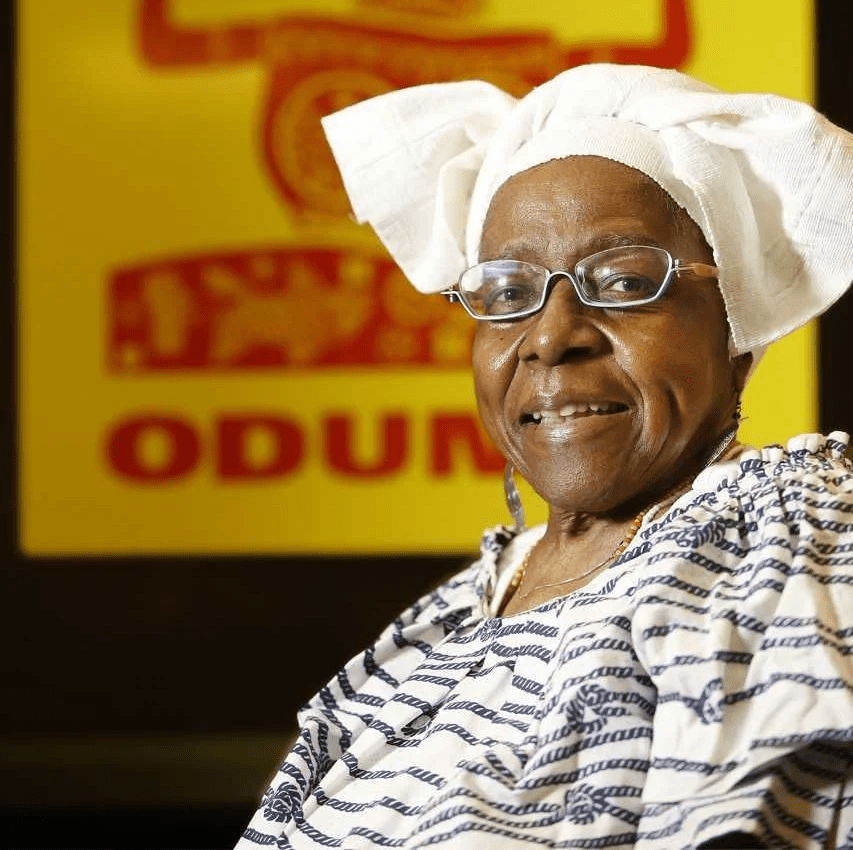
The Vision of Lois Fernandez and the Roots of Tradition
The foundation of ODUNDE was not laid in City Hall, but in the heart of a woman seeking a way to restore lost history to her community. In 1972, Lois Fernandez visited Nigeria, where she witnessed the Yoruba New Year celebrations. She saw thousands of people moving in synchrony toward the water to give thanks for life. Upon returning to Philadelphia, she realized her community lacked more than just a holiday—it lacked roots. The first procession in 1975 was a bold challenge. With only $100 and unwavering faith, Lois led the people to the river. Today, this path—from 23rd and South Streets to the riverbanks—is an essential pilgrimage for those honoring African traditions.
The Ritual of Cleansing and the Symbolism of Offerings
The ODUNDE procession is a triumph of aesthetics and symbolism. Participants traditionally dress in white attire, which in Yoruba tradition symbolizes purity, peace, and openness to the divine. Every element of the ritual carries profound meaning:
- Baskets of Offerings. Participants carry flowers, tropical fruits, and honey. These are not merely gifts, but symbolic “sweets” to ensure a prosperous life in the coming year.
- Honey and Flowers. When these offerings are lowered into the Schuylkill, it becomes an act of negotiation with the universe. People do not pray for material wealth, but for a “sweet” path for their children and peace for their elders.
The Batá Drums: Rhythm as a Connection
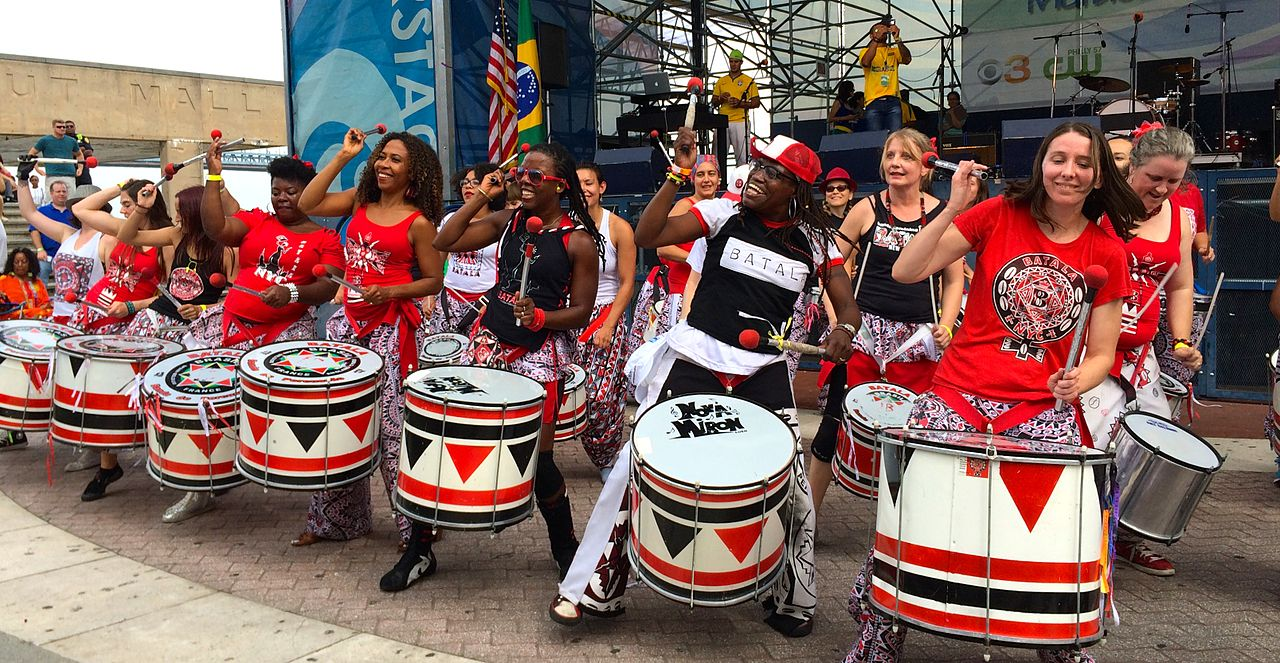
The procession moves to the continuous, hypnotic beat of the Batá drums. In Yoruba culture, the drum is not a musical instrument but a living entity, a mediator between the human world and the Orishas (spiritual entities). Every beat is directed toward Oshun—the goddess of fresh water, love, and fertility. The belief that the divine essence watches over the Schuylkill just as it does the rivers of West Africa creates a unique cognitive space. In this moment, Philadelphia ceases to be a city in Pennsylvania and becomes part of a global African universe.
The River: A Mirror of Identity and Purification
In the history of the African diaspora, water holds a dual, often painful significance. For centuries, the ocean was the route of forced transportation into slavery. However, through ODUNDE, the water undergoes a process of “purification” in the collective consciousness. It stops being a border and becomes a mirror. Participants often describe their feelings this way: “When we look at the Schuylkill during the celebration, we see the waters of the Niger. It is one ocean of memory that cannot be divided by national borders.”
This spiritual component fundamentally distinguishes ODUNDE from any other street festival or carnival. There are no mere spectators here—only participants in a collective experience of self-identification. It is the moment the community declares to the world: “We remember who we are.” Philadelphia, the city of America’s political independence, becomes every June the site of the proclamation of African American spiritual independence.
An Open-Air African Marketplace
When the quiet prayer by the river concludes, ODUNDE shifts its tempo. Sacred silence gives way to the pulsing chaos of the “African Marketplace”—a massive marketplace stretching over 15 blocks of South Philadelphia. The city transforms into a giant “global village,” where the energy of heritage is felt in every movement.
Walking through the ODUNDE marketplace is a visual immersion into African cosmogony. Hundreds of artisans and vendors from around the world offer products with unique stories. A special place is held by Kente cloth—vibrant, hand-woven textiles where every color and geometric pattern is an encoded message about status, wisdom, or hope. Beside the authentic fabrics are heavy brass and wood jewelry, handmade masks, and modern afrocentric apparel. It is a space where fashion meets anthropology.
Choreography of the Spirit and Culinary Traditions of the Diaspora
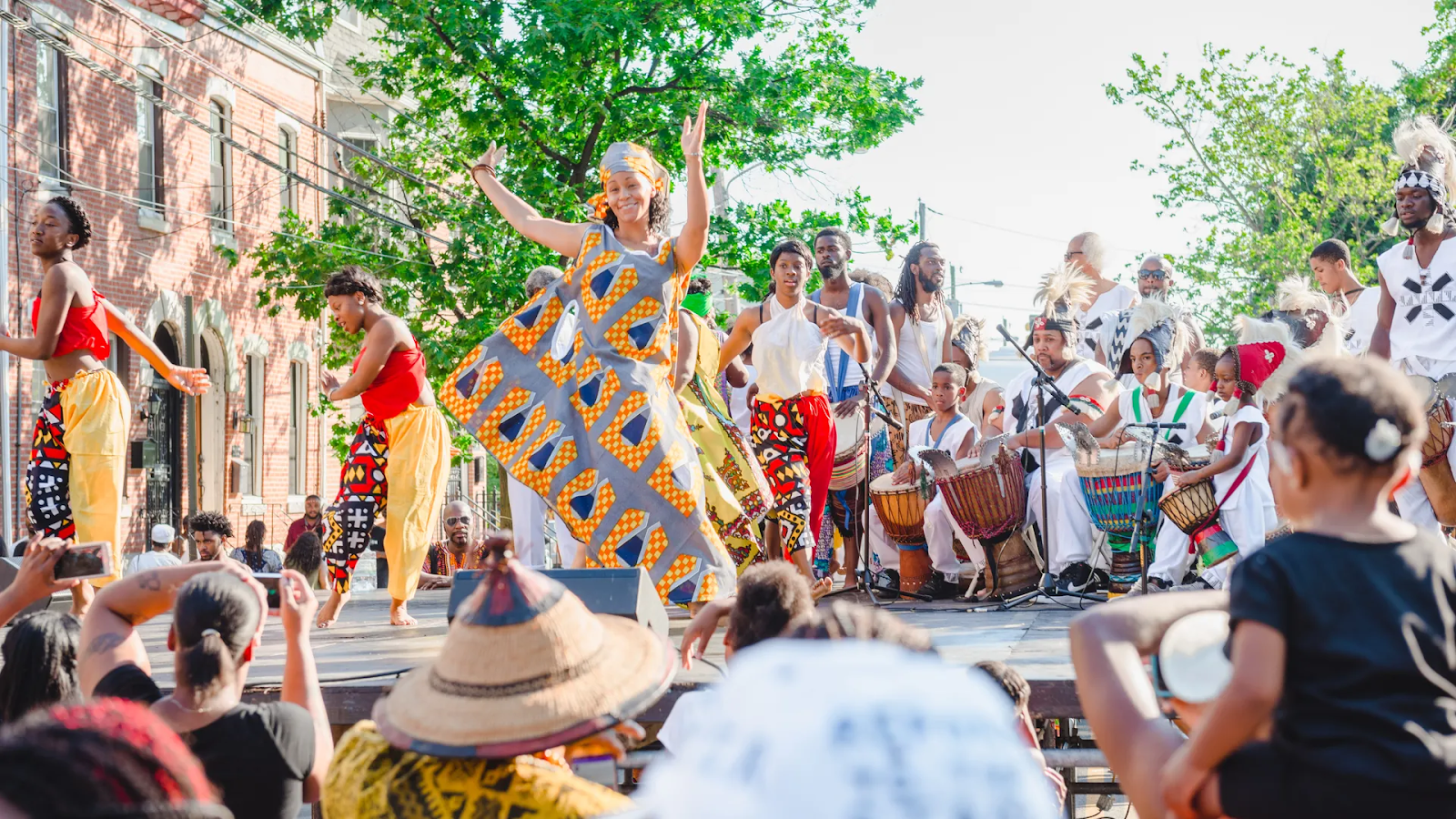
The festival’s numerous stages serve as a center of gravity where music never ceases. A dialogue of generations prevails here:
- Tradition. Masters of the djembe and kora create a rhythmic grid that literally makes the ground vibrate beneath one’s feet.
- Modernity. Afrobeat, reggae, and modern African American pop music fill the space with the energy of the metropolis.
The performances are not mere entertainment but complex choreographic productions. Every leap of a dancer recreates centuries-old rituals. The air of ODUNDE carries a unique aroma, representing the culinary map of the diaspora:
- Sweets and Sides. Golden fried plantains, a mandatory element of the festive table.
- Caribbean Spice. The famous jerk chicken, marinated in fiery spices, reflecting the roots of many participants.
- West Africa. Jollof rice and savory pies, staples of celebrations in Nigeria or Ghana.
The Legacy of Lois Fernandez and Contemporary Impact
Over nearly half a century, ODUNDE has evolved into a powerful community organization. The festival is no longer just a one-day event; it has transformed into a year-round platform for educational and youth programs. The City of Philadelphia recognizes ODUNDE as one of its most vital cultural landmarks. The event aids in dismantling stereotypes and strengthening intercultural dialogue, inviting people of all ethnic backgrounds to celebrate together. The founder’s vision lives on through her daughter and a dedicated team of volunteers, proving that preserving the cultural code is the key to sustainable development and community self-respect.