

The Philadelphia Chinese Lantern Festival is a breathtaking light exhibition that annually transforms the historic Franklin Square into a luminous open-air gallery. Since its debut in 2016 to mark the 10th anniversary of the square’s renovation, the event has rapidly evolved into one of the city’s most cherished summer traditions. The festival seamlessly blends the ancient traditions of Sichuan Province with cutting-edge illumination technology, creating a unique environment where massive silk-and-steel sculptures come to life through thousands of LEDs. This is far more than a visual spectacle; it is a profound immersion into Asian culture, showcasing the unparalleled craftsmanship of Chinese artisans right in the heart of America.
The Chinese Lantern Festival has long transcended being a mere light show, becoming an annual tradition that imbues Philadelphia’s warm evenings with a sense of mysticism. It is a space where steel and fabric are reimagined as delicate lotus flowers, and a standard city park becomes a portal to a world where light doesn’t just scatter the darkness—it narrates captivating legends of harmony and eternal motion. Event details are available at philadelphiaski.com.
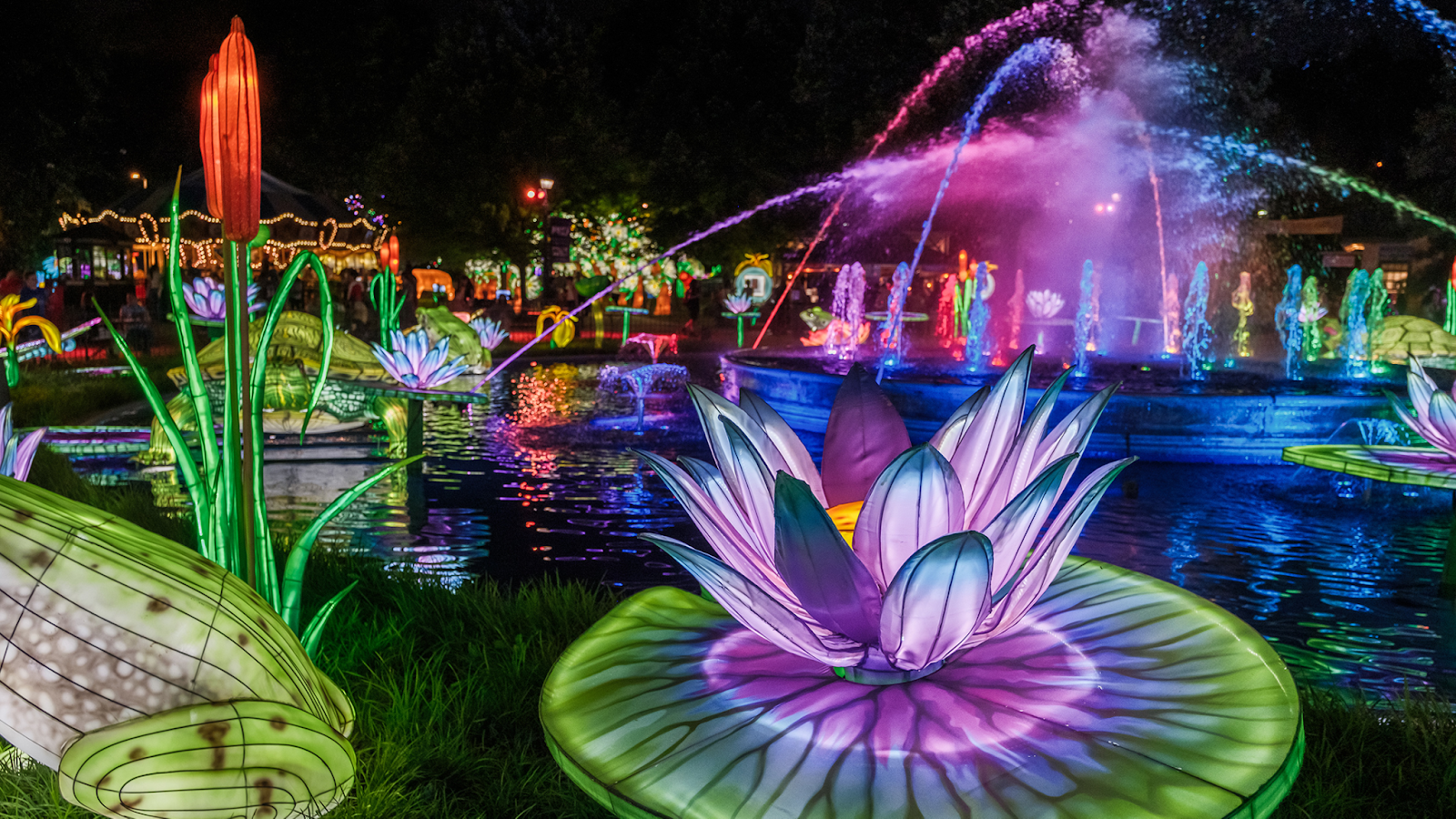
Historical Context of a Modern Tradition
The choice of Franklin Square as the festival’s venue is no coincidence. It is one of the five original open spaces laid out by William Penn in the 17th century. Hosting a Chinese festival here symbolizes the multicultural fabric of modern Philadelphia and its embrace of global traditions. It represents a confluence where American history meets Eastern philosophy, adding a new layer to the city’s cultural identity.
To manage the high volume of visitors, organizers utilize a timed-entry ticketing system, which prevents overcrowding and preserves the magical ambiance of an evening stroll. Crucially, a portion of the proceeds from ticket sales supports Historic Philadelphia, Inc., a non-profit dedicated to the preservation and promotion of the city’s historic sites. In this way, the celebration of light directly contributes to the stewardship of the square’s American heritage, creating a vital link between commercial entertainment and public preservation.
Art in the Details: From Steel to Silk
Every installation at the festival is the result of painstaking labor by dozens of master craftsmen who travel to Philadelphia directly from Zigong—the world’s lantern-making capital. The process of creating these ephemeral monuments combines rigorous engineering with artistic virtuosity.
- Frame and Form. The foundation of each figure is a complex metal skeleton, hand-welded into the shapes of animals, mythical creatures, or architectural marvels.
- Silk Cladding. The steel structures are wrapped in thousands of yards of vibrant silk or specialized synthetic fabric, which is then hand-painted by artists to provide texture and lifelike detail.
- Lighting Design. The internal lighting is carefully calibrated so that the installations appear to “breathe,” with some featuring mechanical components that allow the figures to move or emit steam.
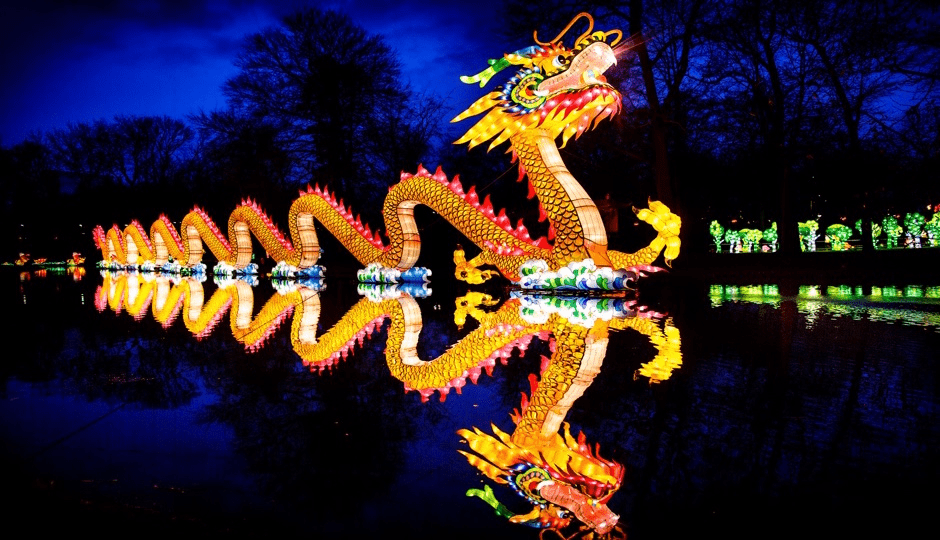
The undisputed showstopper is traditionally the Massive Dragon, often stretching over 200 feet (ca. 61 m) in length. This fiery creature symbolizes good fortune and prosperity, serving as the ultimate backdrop for millions of visitor photos and acting as the quintessential emblem of summer in Philadelphia.
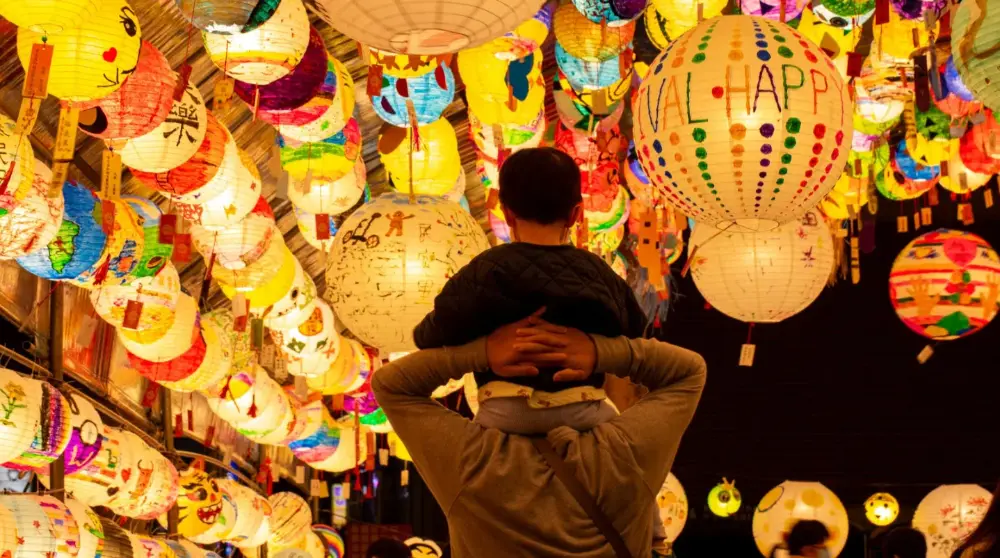
A Cultural Kaleidoscope: When Light Lives Through Movement and Taste
While the grand light installations are the primary visual magnet, the true heart of the Chinese Lantern Festival beats on its performance stages and within the charming corners of the artisan booths. The organizers have masterfully turned Franklin Square into a venue where Eastern magic is no longer a static image but a living, dynamic experience that engages all the senses.
Masterpieces of Ancient Skill
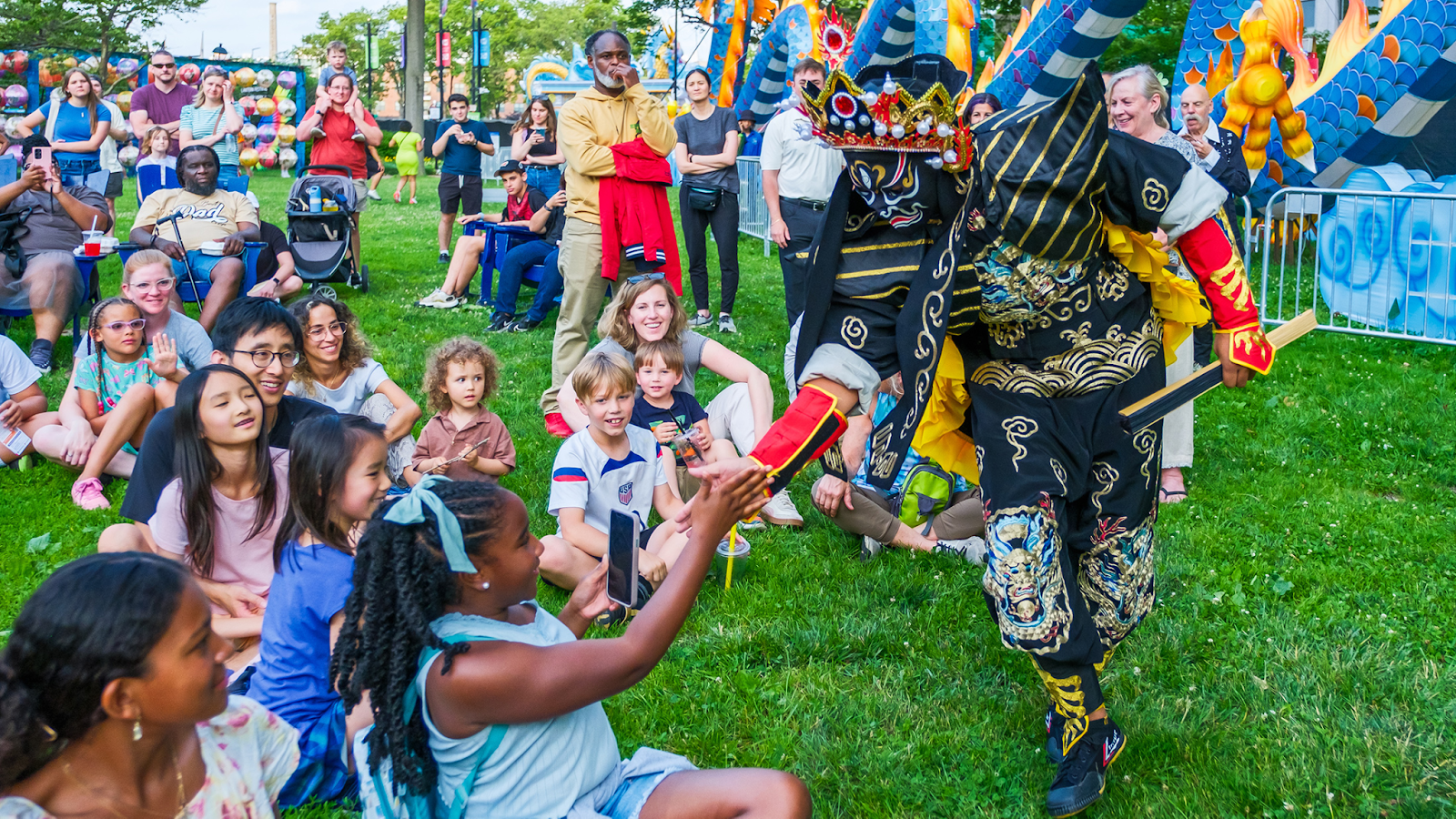
Every evening, the festival’s main stage becomes the epicenter of excitement. The most anticipated performance is invariably Bian Lian—the ancient art of “face changing” from Sichuan Opera. Spectators watch in hushed anticipation, trying to catch the split second when an actor, with a nearly imperceptible movement, swaps one vibrant mask for another, revealing a whole palette of emotions. This art form was a strictly guarded secret for centuries, and its demonstration in the heart of Philadelphia adds a layer of exclusivity to the evening.
Alongside the magic of the masks, Chinese acrobats perform feats of flexibility and balance that seem to defy the laws of physics. From graceful fan dances that mimic the movement of drifting clouds to high-intensity strength acts, every performance embodies the philosophy of harmony between body and spirit.
Craftsmanship in Real Time
Venturing further from the stage leads visitors to the artisan rows, where time seems to stand still. Here, you aren’t just buying a souvenir; you are witnessing the birth of an artifact:
- Sugar Painting (Tang Hua). Masters use molten liquid sugar as ink, “painting” intricate dragons, birds, or flowers onto a marble slab. Within minutes, this sweet masterpiece hardens into an edible sculpture on a stick.
- Clay Figurines and Weaving. In the hands of these craftsmen, simple clay or straw is transformed into miniature legendary heroes or animals of the Chinese zodiac. It is a living dialogue with a tradition passed down through generations over millennia.
The Taste of the Orient Under Philadelphia Stars
The thematic journey would be incomplete without a deep dive into culinary traditions. The festival offers a curated menu that goes far beyond standard fair food. In addition to the park’s classic treats, guests can savor:
- Fried Gyoza and Dim Sum: Authentic Eastern comfort food, perfect for an evening walk through the lights.
- Bao Buns: Fluffy and tender, with various fillings, these have become a certified hit among food bloggers.
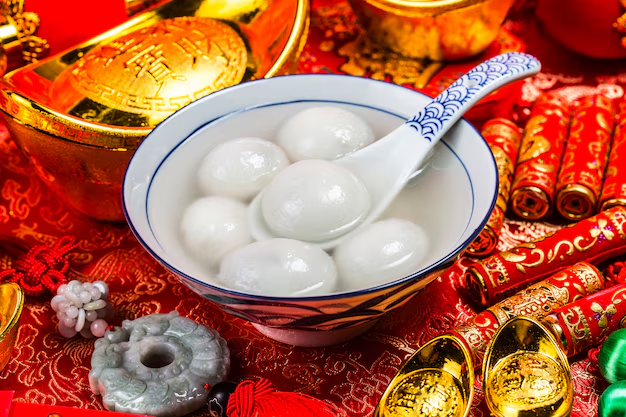
- Exotic Drinks and Desserts: From bubble tea to rice-flour sweets, adding a vibrant final note to the evening.
The festival in Franklin Square is a rare opportunity to see a modern American metropolis take the shape of an ancient civilization for a few hours. This is not mere entertainment; it is a profound cultural exchange where every detail—from the embroidery on a performer’s costume to the taste of a sugar dragon—tells a story of heritage and the beauty of diversity.
Impact on the City and Community
The Chinese Lantern Festival has become a vital economic driver for the Chinatown district, located just a few blocks from the square. The influx of tourists stimulates local restaurants and shops, strengthening the ties between different parts of Center City.
Although a commercial event, it carries a significant educational weight, teaching visitors about the symbolism of the zodiac, the meaning of colors in Chinese culture, and the importance of sustainability (through the exclusive use of LED bulbs). This celebration proves that even in a digital world, traditional decorative arts based on manual labor can evoke genuine wonder in a modern audience.
Key Facts About the Philadelphia Chinese Lantern Festival
| Feature | Detail / Parameter | Significance for Philadelphia |
| Founded | 2016 | Anniversary event for the 10th year of Franklin Square’s restoration. |
| Origin | Zigong, Sichuan Province | Utilization of authentic lantern-making techniques. |
| Centerpiece | The Giant Dragon | A symbol of power and luck; the main visual focal point. |
| Number of Exhibits | Approx. 30–40 large groups | Displays are refreshed and updated every season. |
| Social Mission | Supporting Historic Philadelphia | Funding historic sites through large-scale public events. |
| Duration | Typically 6–8 weeks (summer) | One of the city’s longest-running nighttime festivals. |
Sources:
- https://www.visitphilly.com/things-to-do/events/philadelphia-chinese-lantern-festival-at-franklin-square/
- https://campusphilly.org/event/philly-night-out-at-the-philadelphia-chinese-lantern-festival-2025/
- https://www.inquirer.com/philly-tips/chinese-lantern-festival-philadelphia-2022.html
- https://whyy.org/articles/chinese-lantern-festival-philadelphia-franklin-square/
- https://www.phillyvoice.com/chinese-lantern-festival-philadelphia-2023-tickets-franklin-square-/