

While March in Philadelphia still grapples with the final sighs of a gray winter, and the damp wind from the Delaware River forces pedestrians to wrap their coats more tightly. A genuine climatic rebellion takes place behind the massive doors of the Pennsylvania Convention Center. You take a step—and instead of the scent of wet asphalt and urban clamor, you are overwhelmed by an avalanche of aromas: damp earth, blooming hyacinths, and exotic orchids.
This is not merely an exhibition; it is the Philadelphia Flower Show, the world’s oldest and largest indoor floral marathon, which since 1829 has served as the official portal to spring for the residents of the City of Brotherly Love. Each year, the Pennsylvania Horticultural Society (PHS) transforms acres of concrete into a pulsating botanical Eden, where hundreds of thousands of visitors witness the intersection of floristry with fine art, engineering, and a global environmental mission.
In this article at iphiladelphia.net, you will discover how the world’s oldest flower marathon has transformed Philadelphia into a blooming Eden since 1829, blending theatrical floral design and cutting-edge horticultural technology. It has a global mission to green underserved neighborhoods and plant a million trees.
From Humble Beginnings to a World Record
The show’s history began nearly two centuries ago when a group of enthusiastic botanists decided to showcase their achievements in a small hall on Chestnut Street. At that time, the centerpiece was the first poinsettia ever presented in America, brought from Mexico. Since those early days, the show has evolved into a colossal cultural engine that dictates landscape design trends for years to come.
Evolution of Scale and Concept
- Scale. Over the years, the venues grew increasingly larger until 1896, when the show eventually moved to its modern home at the Pennsylvania Convention Center. The current exhibition space exceeds 440,000 square feet (ca. 4 ha), allowing for installations that were once technically impossible to achieve indoors.
- Thematic Focus. Each year, the festival selects a new central theme (such as “Holland,” “The Garden Electric,” or “United by Flowers”), which dictates the aesthetic of every pavilion, from the grand entrance to the smallest decorative details in the dining areas.
- Legacy. The event has become more than just entertainment; it serves as a powerful educational platform advocating for sustainability, biodiversity, and urban reforestation.
The show has survived wars and economic depressions, returning each time with cutting-edge technologies in hydroponics, vertical gardening, and sophisticated landscape lighting, making it a premier showcase for innovation in the horticultural world.
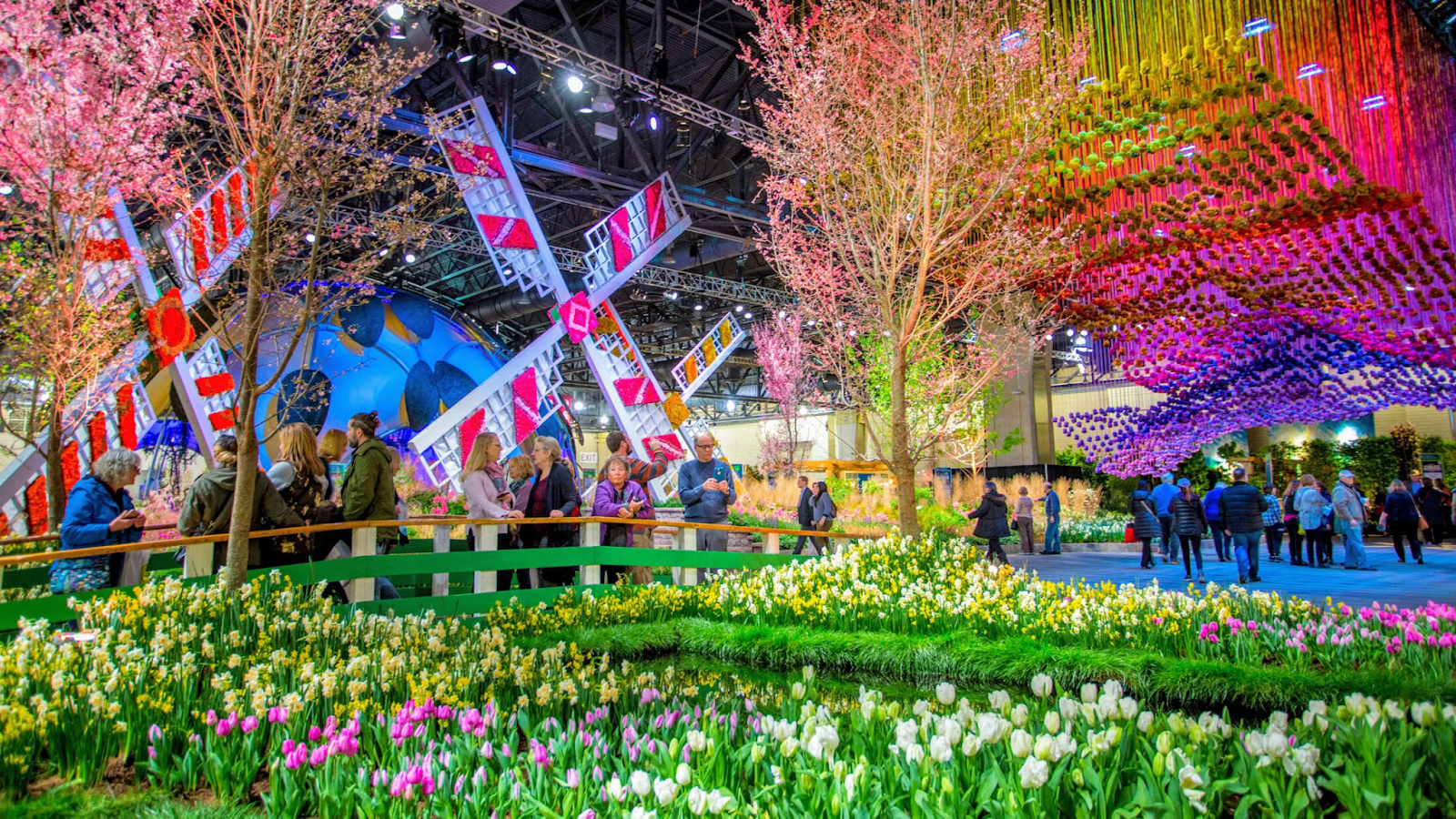
Art in Petals: Design Masterpieces and Theatricality
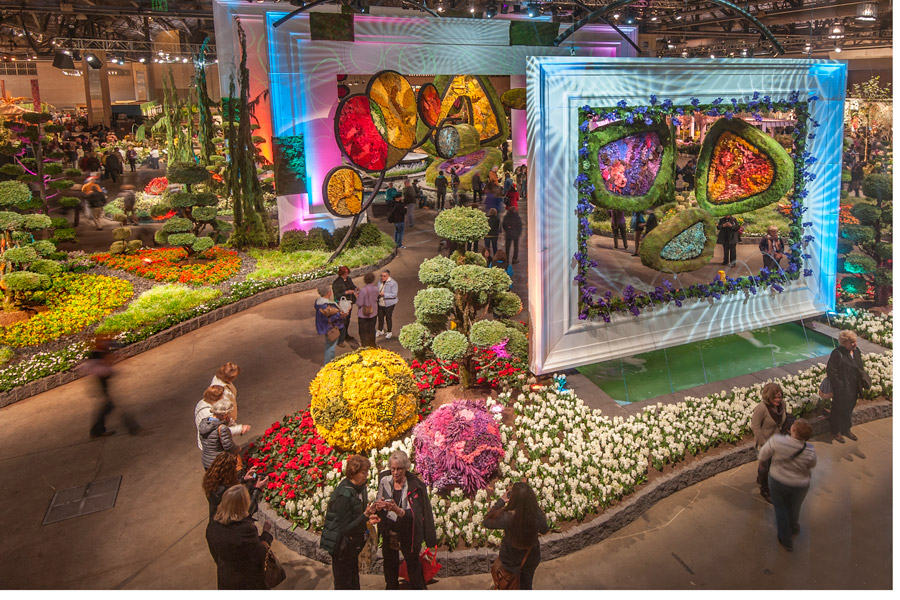
The primary distinction of the Philadelphia Flower Show from other global counterparts is its emphasized theatricality. The world’s top landscape architects and floral designers create massive living sets that include waterfalls, complex metal structures, mirrored mazes, and high-tech light shows.
Exhibits are evaluated by a strict international jury across dozens of categories, from a perfectly grown single cactus in a pot to colossal gardens that fully recreate desert ecosystems, alpine meadows, or tropical rainforests. The competition is so fierce that preparation for the show lasts an entire year, while the on-site assembly of complex compositions takes place in just a few days before the grand opening. For visitors, this is a unique opportunity to see rare orchid species, centuries-old bonsai trees, and newly bred varieties that are not yet available for public sale.
More Than Flowers: The Social and Environmental Mission of PHS
It is crucial to understand that the Philadelphia Flower Show is not merely a commercial or aesthetic endeavor. All proceeds from ticket sales and sponsorships are directed toward the charitable and social programs of the Pennsylvania Horticultural Society (PHS). Consequently, every visitor contributes to the betterment of the city.
- Urban Farming. Supporting community gardens and urban plots in underserved neighborhoods, providing residents with fresh organic produce, and creating green sanctuaries in industrial blocks.
- Trees for Philly. A massive, long-term program to plant one million trees to combat the “heat island effect” in the urban environment, which is critical for improving the city’s microclimate and air quality.
- Green Jobs. A unique initiative for training and employing formerly incarcerated individuals in the fields of landscape design and horticulture, aiding their successful social reintegration and reducing recidivism rates.
Therefore, by visiting the show, guests indirectly help make Philadelphia cleaner, greener, and safer. This creates a strong emotional connection between a high-profile social event and the real, pressing needs of the city’s diverse communities.
The City’s Floral Pulse: Impact on Economy and Tourism
“Bloom Philly” For Philadelphia, the week of the flower show represents the absolute peak of tourist activity during spring. Hotels, restaurants, and local shops prepare special offers, and boutique windows in Center City are adorned with live flowers as part of the massive “Bloom Philly” window decorating contest.
Although the event traditionally takes place indoors, during the pandemic (2021–2022), the show was moved outdoors for the first time in its nearly 200-year history to Franklin Delano Roosevelt Park. This experiment demonstrated the organizers’ flexibility and offered a new perspective on integrating the exhibition into a natural landscape. However, the subsequent return to the Convention Center allowed for the utilization of complex technical equipment and climate-control systems, reaffirming the Philadelphia Flower Show’s status as the most technologically advanced floral event in the world.
Facts About the Philadelphia Flower Show
| Characteristic | Parameter / Detail | Significance for History and the City |
| Founding Year | 1829 | The oldest continuous flower show in the United States. |
| Organizer | PHS | A nonprofit organization with a powerful social mission. |
| Location | PA Convention Center | Over 440,000 square feet (ca. 4 ha) under one roof. |
| Attendance | Approx. 250,000 annually | A major driver of the city’s economy every March. |
| Core Value | Science & Design | Implementation of the latest eco-tech and breeding. |
| Charity | Revenue Reinvestment | Funding urban greening and farming programs. |
Ultimately, the Philadelphia Flower Show is a testament to the fact that nature can flourish even in the heart of the concrete jungle if people possess the creative will and a commitment to their environment.
Sources:
- https://www.inquirer.com/things-to-do/philadelphia-flower-show-2024-20240302.html
- https://campusphilly.org/event/phs-philadelphia-flower-show-at-the-pennsylvania-convention-center-2-2026-03-01/2026-03-01/
- https://peonysenvy.com/events/philadelphia-flower-show?srsltid=AfmBOoq9NPcC9E2jkKEy7lc_2LzblqRvpN95kR2PR5qdLza7Qclej-H5
- https://meristemhorticulture.com/planted/2024-philadelphia-flower-show