

Among the green slopes descending toward the Schuylkill River in Philadelphia lies a place that is not merely a graveyard but a grand open-air historical theater—Laurel Hill Cemetery. Founded in 1836, it became one of the first and most striking examples of the American “rural cemetery” movement, combining monumental architecture with park-like landscaping.
But the true intrigue of Laurel Hill lies in who found their eternal rest here. Its avenues are a panoramic showcase of not only the political but also the cultural elite of Philadelphia and all of America. It is the resting place of magnates whose decisions shaped the press, music, and art of an entire nation.
Discover the following in the latest article on philadelphiaski.com:
- National Historic Landmark Status: Learn how this “open-air museum” functions today and what unique guided tours it offers to modern travelers;
- The Victorian Aesthetic Revolution: How a place of mourning was transformed into Philadelphia’s first public park and a premier destination for high-society picnics;
- Architectural Secrets of the Pantheon: From Egyptian pyramids to Gothic chapels—discover how family mausoleums became enduring symbols of U.S. economic power;
- Titans of Media and Finance: Explore the biographies of tycoon Cyrus Curtis and Stephen Girard, the wealthiest man of his era, both interred along the banks of the Schuylkill;
- Military Glory of Laurel Hill: The legacy of General George Meade, the victor of Gettysburg, and other prominent Civil War leaders who rest within these historic grounds.
The Aesthetic Revolution
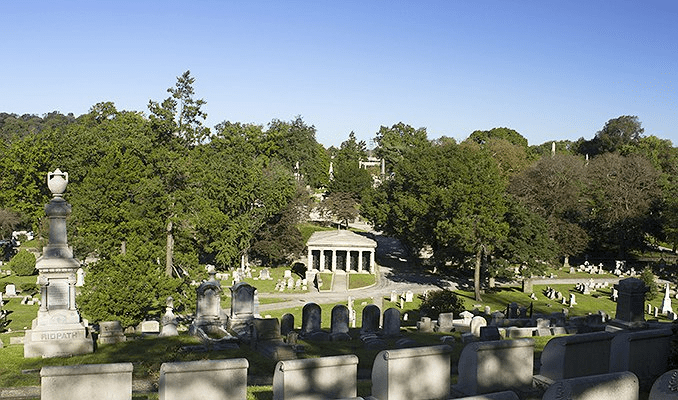
The founding of this landscape masterpiece was a reaction to the overcrowded and unhygienic conditions of older city cemeteries. They no longer matched the ideals of the Victorian era, which valued cleanliness, order, and a romantic contemplation of death. Laurel Hill was therefore conceived as a “rural cemetery”—a concept imported from Europe that combined the functions of a burial ground and a public park.
The site’s design on the high, picturesque banks of the river was executed with a deep focus on landscape architecture. Roads and avenues twisted in graceful lines, avoiding straight angles, which created a sense of infinity and serenity. Every plot was perfectly planned to encourage meditation, walking, and reflection on life. In the 19th century, Laurel Hill became Philadelphia’s first public park. Families would come here for picnics and social promenades among the greenery, flowers, and majestic memorials that replaced modest gravestones. Families competed in the splendor of mausoleums and obelisks, transforming the site into an open-air architectural museum, where every structure was a work of art created by prominent artists and sculptors. This aesthetic movement changed the American attitude toward death, integrating the memory of the deceased into the daily life of society.
The Stones That Speak
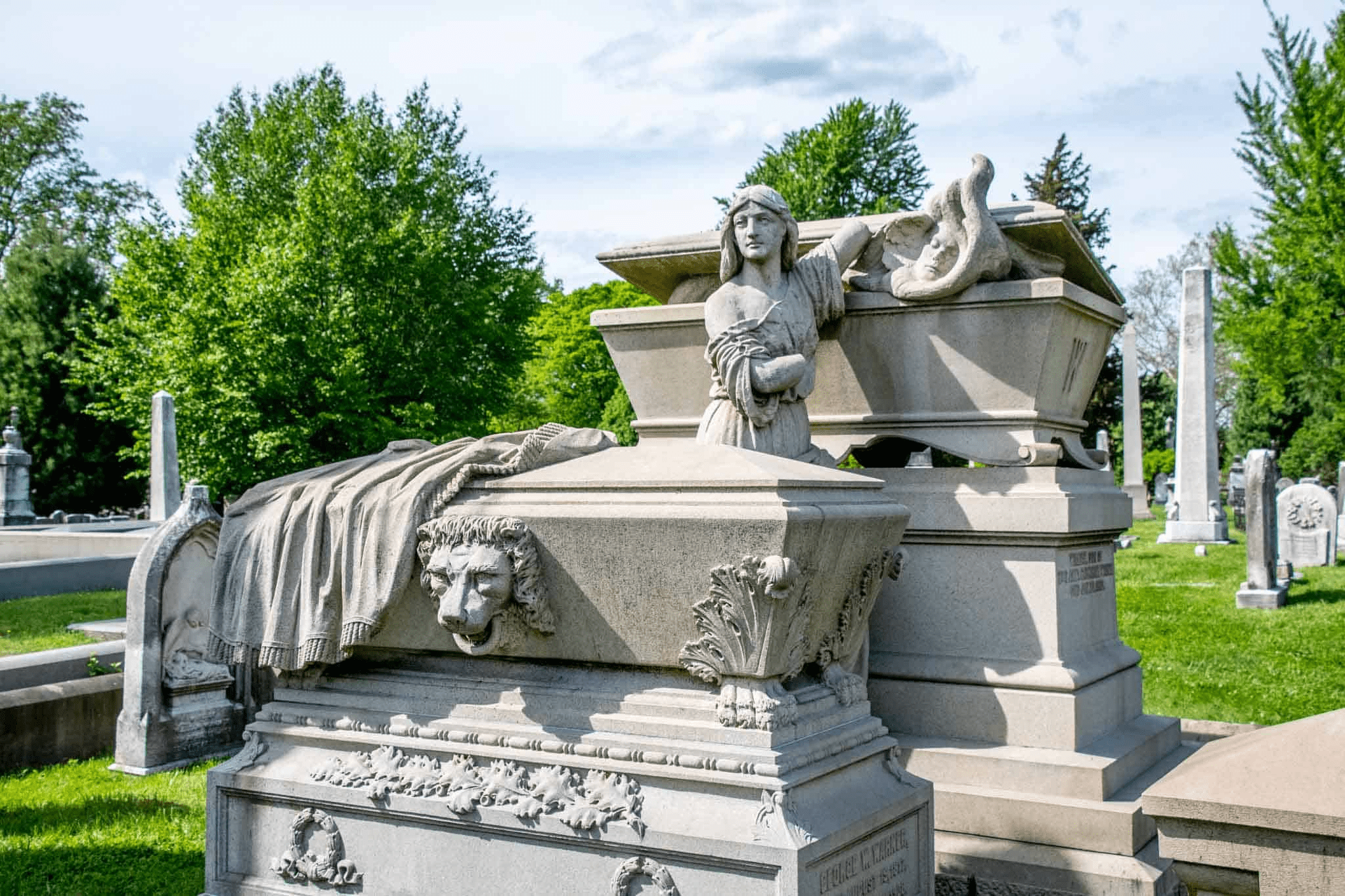
Laurel Hill is not just a burial site but a true treasury of American sculpture and memorial architecture. The gravestones, monuments, and opulent family mausoleums on its grounds reflect a wide range of architectural styles that dominated America for two centuries—from austere, restrained Neoclassicism to the lavish and detail-rich Victorian Eclecticism.
Many wealthy families commissioned complex allegorical compositions. These stone creations immortalized the deceased and carried profound meaning, symbolizing their professional achievements, contributions to society, or moral virtues.
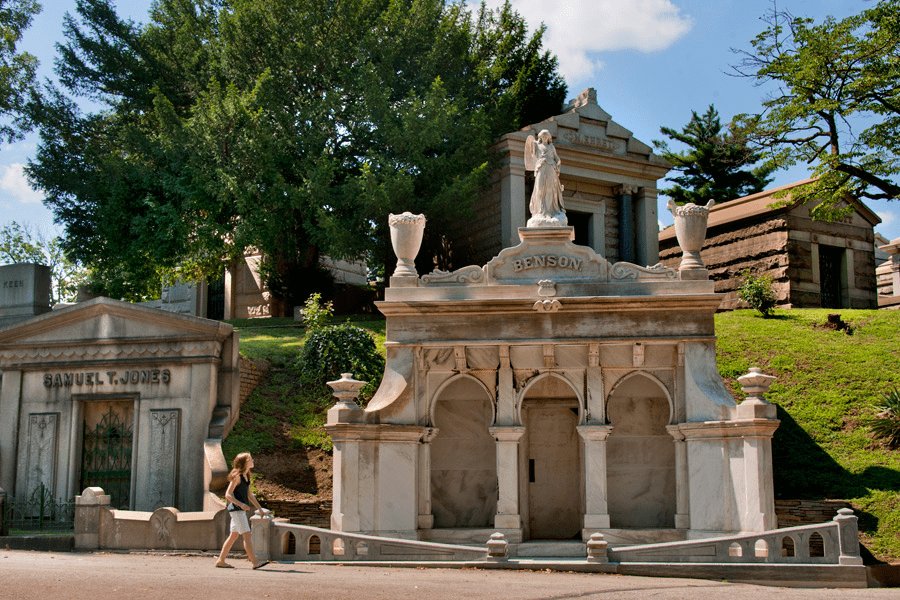
The magnificent family tombs—stylized as miniature Greek temples, enigmatic Egyptian pyramids, or graceful Gothic chapels—clearly underscored the social status and economic power of the individuals interred there. Such a high concentration of artistic works and architectural mastery quickly attracted the attention of art critics and historians. This transformed Laurel Hill Cemetery into an important site for studying American mourning aesthetics and the Victorian view of life and death.
The Resting Place of Titans
The cemetery became the final haven for individuals whose power extended far beyond Philadelphia. They were at the center of their time, wielding tremendous influence over the American press, finance, and cultural sphere. These early magnates transformed the provincial city into a massive business machine that shaped the nation’s public opinion.
Among Laurel Hill’s majestic crypts, the following famous figures found eternal rest:
- Cyrus Curtis: Legendary publisher, founder of the Curtis Publishing Company. His flagship magazines, including The Saturday Evening Post and Ladies’ Home Journal, literally shaped the views of millions of Americans. They dictated fashion, influenced politics, and set standards for middle-class life for decades.
- Mary Louise Curtis Bok: His daughter, who decided to invest the family fortune in the development of high art. She became a renowned patron and founder of the Curtis Institute of Music.
- Mathew B. Brady: Although buried more modestly, he is a pioneer of visual media and photography. He created the harrowing and truthful visual archive of the Civil War.
- Stephen Girard: The wealthiest financier of his time, whose millions shaped the city’s charitable and economic legacy for years to come.
- Horace Howard Furness: An eminent Shakespearean scholar and editor who influenced American theatrical culture and the academic stage.
These interments vividly illustrate Philadelphia’s key role as an early capital of the American printed word and a financial capital. Their stone monuments at Laurel Hill serve as an eternal reminder of how their influence surpassed life itself.
The Pantheon of Heroes
The cemetery is not just a memorial site but an important historical marker of American military history. Dozens of generals and admirals who participated in the Civil War and other military conflicts found eternal peace here. Their monuments are not only tributes but also epitaphs of an era.
The most significant, undoubtedly, is the burial of General George Milton Meade. He commanded the Union Army and won the decisive Battle of Gettysburg—a key event of the Civil War. His majestic, refined monument is one of the cemetery’s main architectural focal points, symbolizing the importance of his contribution to preserving the Union.
In addition to the military elite, four Philadelphia mayors, numerous members of Congress, and senators are interred on the grounds. This fact clearly underscores Laurel Hill’s status as the primary resting place for the city and national elite. It serves as a visual illustration that Philadelphia’s most influential political and military leaders chose it as their final residence.
Legacy and Modern Mission
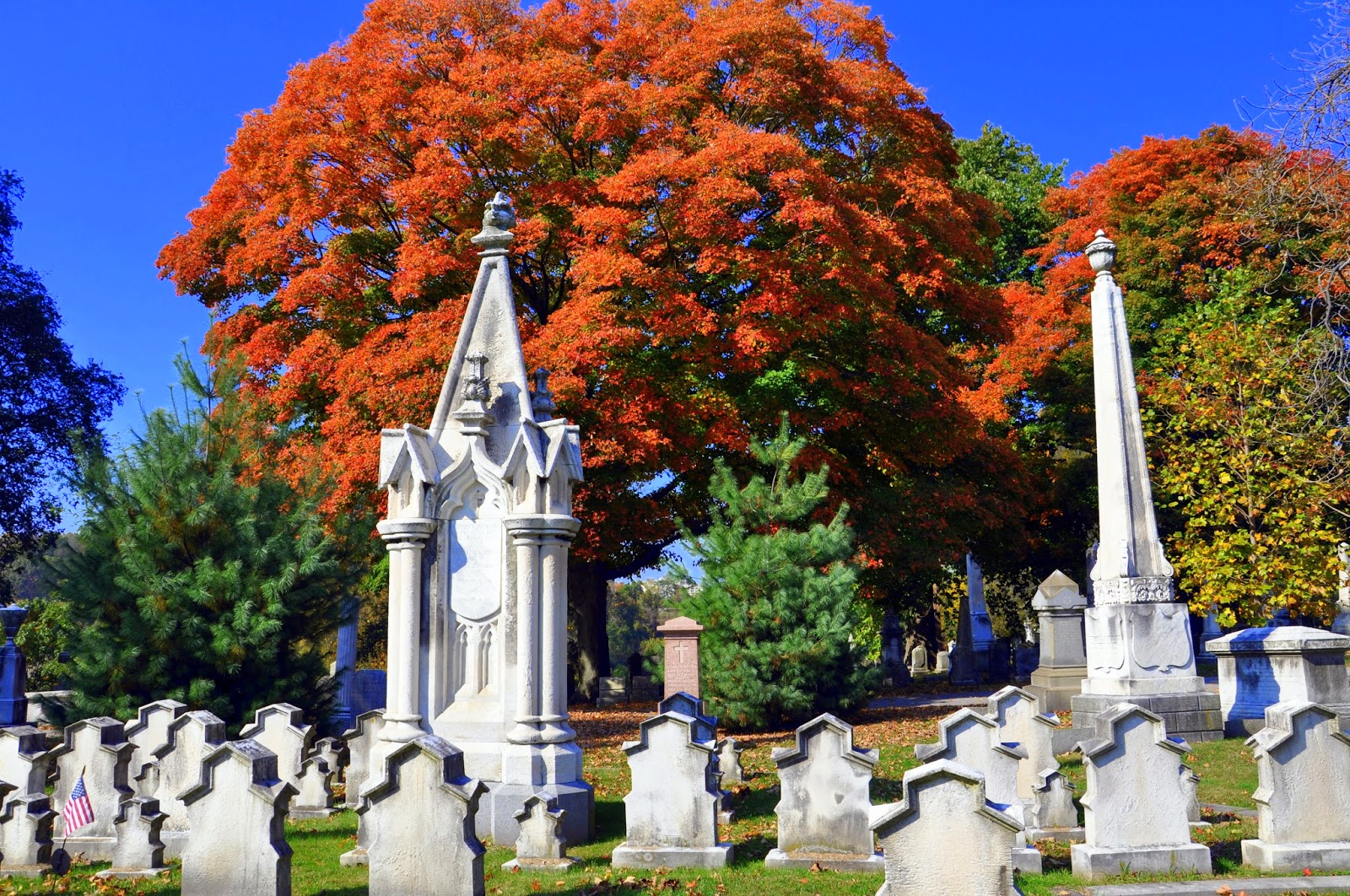
Today, Laurel Hill holds the official status of a National Historic Landmark. Although its original function as a site for Victorian social outings and family picnics has faded, it remains a living museum of history, architecture, and the evolution of American taste.
The cemetery’s Board of Trustees has taken on an important educational mission. It conducts regular tours and educational programs, including themed tours dedicated to media magnates, artistic figures, and Civil War military strategists. This active engagement helps preserve the cemetery’s unique heritage and ensures a constant flow of visitors who seek to touch the eternal history of the nation.
Laurel Hill is more than just ground that accepted the dead; it is a stone library where every gravestone is a page. It serves as a monumental testimony that the memory of those who shaped America’s politics, culture, and military remains unbroken. The cemetery is an eternal space where fame and influence conquered time, and the nation’s elite found their silent, yet grandest, pantheon.