

If modern music has an intellectual center and a rhythmic heart, it is Amir “Questlove” Thompson. A Philadelphia native, co-founder of the legendary band The Roots, winner of an Oscar and five Grammys, and the long-standing bandleader for The Tonight Show Starring Jimmy Fallon, he has become the living embodiment of the Philadelphia musical renaissance. Questlove is not just a virtuoso drummer; he is a musicologist, director, and visionary coding the DNA of African-American culture for the world. Find more about this musical genius at philadelphiaski.com.
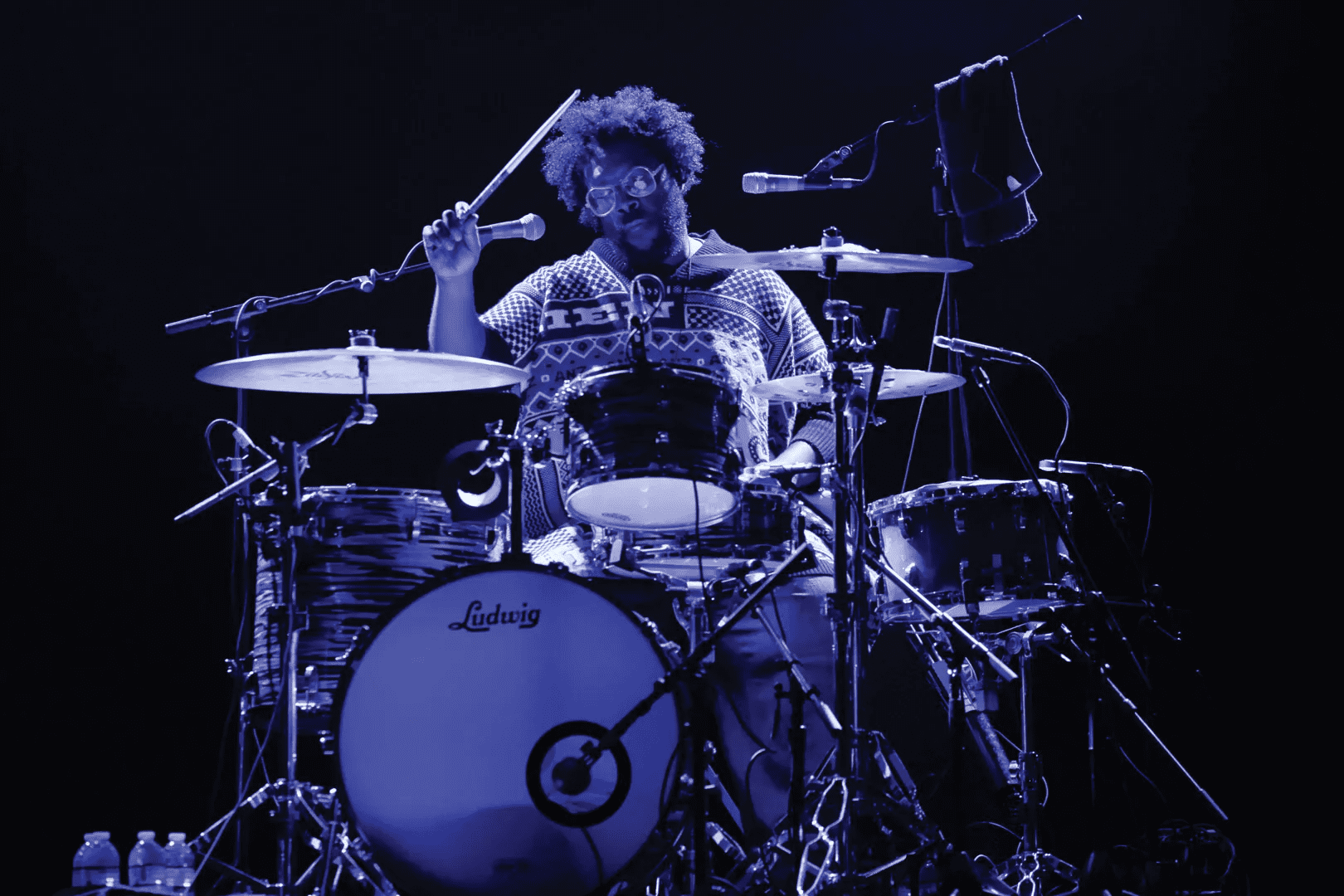
A Musical Dynasty’s Legacy: Questlove and the Roots of Philly Soul
Amir Khalib Thompson, known to the world as Questlove, didn’t just grow up in Philadelphia—he became its living musical memory. In a city where every brick house seems to breathe rhythm and blues, Amir emerged as the heir to true cultural royalty. His story isn’t one of accidental success but of fanatical devotion to the rhythm, beginning before he could even hold a spoon steady.
The Musical Aristocracy of Lee Andrews
Born in 1971, Amir was thrust into an environment where music was a profession, a religion, and a daily routine. His father, Arthur Thompson (known as Lee Andrews), was the frontman of the legendary doo-wop group Lee Andrews & the Hearts. His mother, Jacqui Thompson, was also an integral part of this musical ecosystem. For Amir, the backstage of Philly clubs was his playground, and the sounds of rehearsals were his lullabies.
On the Road: The 12-Year-Old Director
While his peers were learning to ride bikes, Amir was mastering tour schedules and lighting cues. By age seven, he was traveling with his parents as a functional part of the show, and by twelve, he had become their musical director. This wasn’t child’s play; his father demanded absolute precision. This rigor taught him to see musical structures holistically—a skill that would later make him one of the most sought-after producers on the planet.
CAPA: Where Destiny Met
Attending the Philadelphia High School for the Creative and Performing Arts (CAPA) catalyzed a revolution. In those hallways, where the spirit of experimentation reigned, Amir met Tariq Trotter (Black Thought). Their partnership blended intellectual rap with a raw, live instrumental drive. They started out as The Square Roots, busking for crowds on South Street, before shortening the name to the iconic The Roots—forever changing the face of hip-hop by reintroducing a live soul and real drums to the genre.
Amir’s first true encounter with the drums happened not in a classroom, but in the shadow of his father’s fame. Little Thompson would spend hours sitting on a milk crate backstage, watching his father’s drummers work. He wasn’t just listening; he was “ripping” every wrist movement and every cymbal accent, trying to recreate those sounds at home on kitchen pots and pans.
This childhood of observing world-class pros forged his unique “lazy” yet hyper-accurate groove. To him, the drum kit wasn’t just an instrument; it was a language he began speaking before he ever mastered grammar. It was there, amidst the scent of old theaters and the echoes of his father’s doo-wop, that the impeccable rhythm was born—the very beat that now serves as the heart of the Jimmy Fallon show and the entire modern music scene.
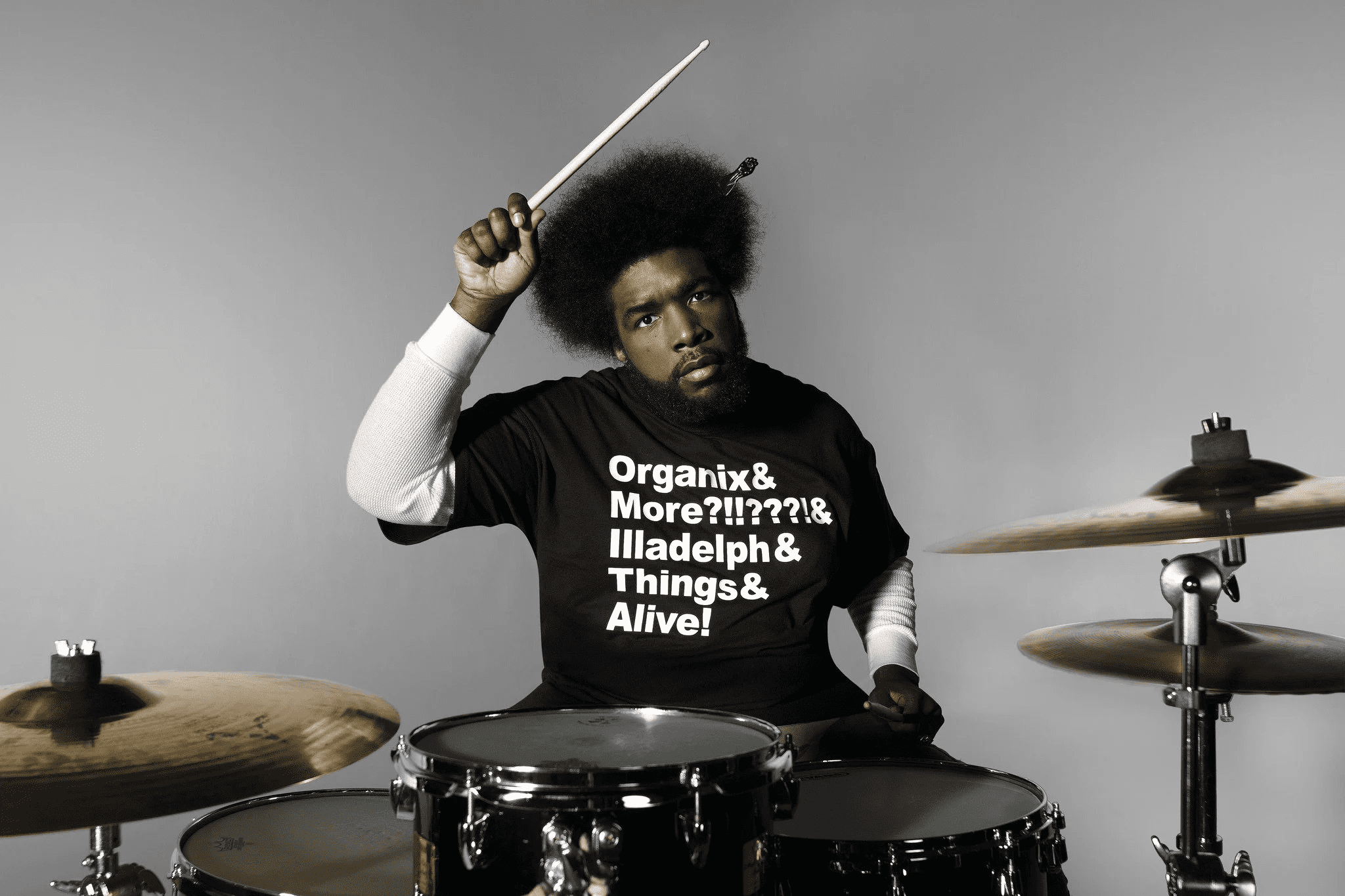
The Roots: How Live Instrumentation Shifted Hip-Hop
In the 90s, hip-hop was a kingdom of machines. SP-1200 samplers and MPC drum machines dictated the rules, creating perfectly looped but “cold” beats. The arrival of Questlove and his crew was a glitch in the system. They dared to bring a full drum kit, live bass, and keys to the stage, proving that rap could have a pulse, a breath, and the improvisational depth of jazz.
- The Live Sound Revolution. While other artists hunted for the perfect break on an old record, The Roots created those breaks in real-time. Questlove became the first drummer to play with the precision of a machine but the “grit” of street culture. This challenged the entire industry.
- The Philly Melting Pot. Thanks to Amir, the band became the perfect bridge between intellectual jazz improv, soul, and the hard rhythms of South Street. It was the organic sound of the city—raw, technical, and steeped in the spirit of freedom.
- The Neo-Soul Lab. The Roots’ jam sessions in Philly clubs became an incubator for future stars. Under Amir’s influence and his ability to craft the perfect pocket, artists like Erykah Badu, D’Angelo, and Common found their footing. Questlove wasn’t just playing drums; he was the architect of a new genre.
- The Soulquarians Era and Rhythmic Magic. At the turn of the millennium, Amir became the center of the legendary Soulquarians collective. Within the walls of Electric Lady Studios, they tracked the era’s definitive albums, including D’Angelo’s masterpiece Voodoo. Questlove popularized complex rhythmic “behind-beat” patterns (the drunk beat), mimicking J Dilla’s production style on live drums. This sign “lazy” rhythm, where the snare hit lags slightly, became the gold standard of intellectual soul.
Questlove’s secret was becoming a “human metronome” who consciously veered off-tempo to give the music life. His drums didn’t just keep time; they spoke, argued, and flirted with the other instruments. For Philadelphia and the wider world, he was the man who proved that while digital tech is great, real magic happens where the stick meets the drumhead.
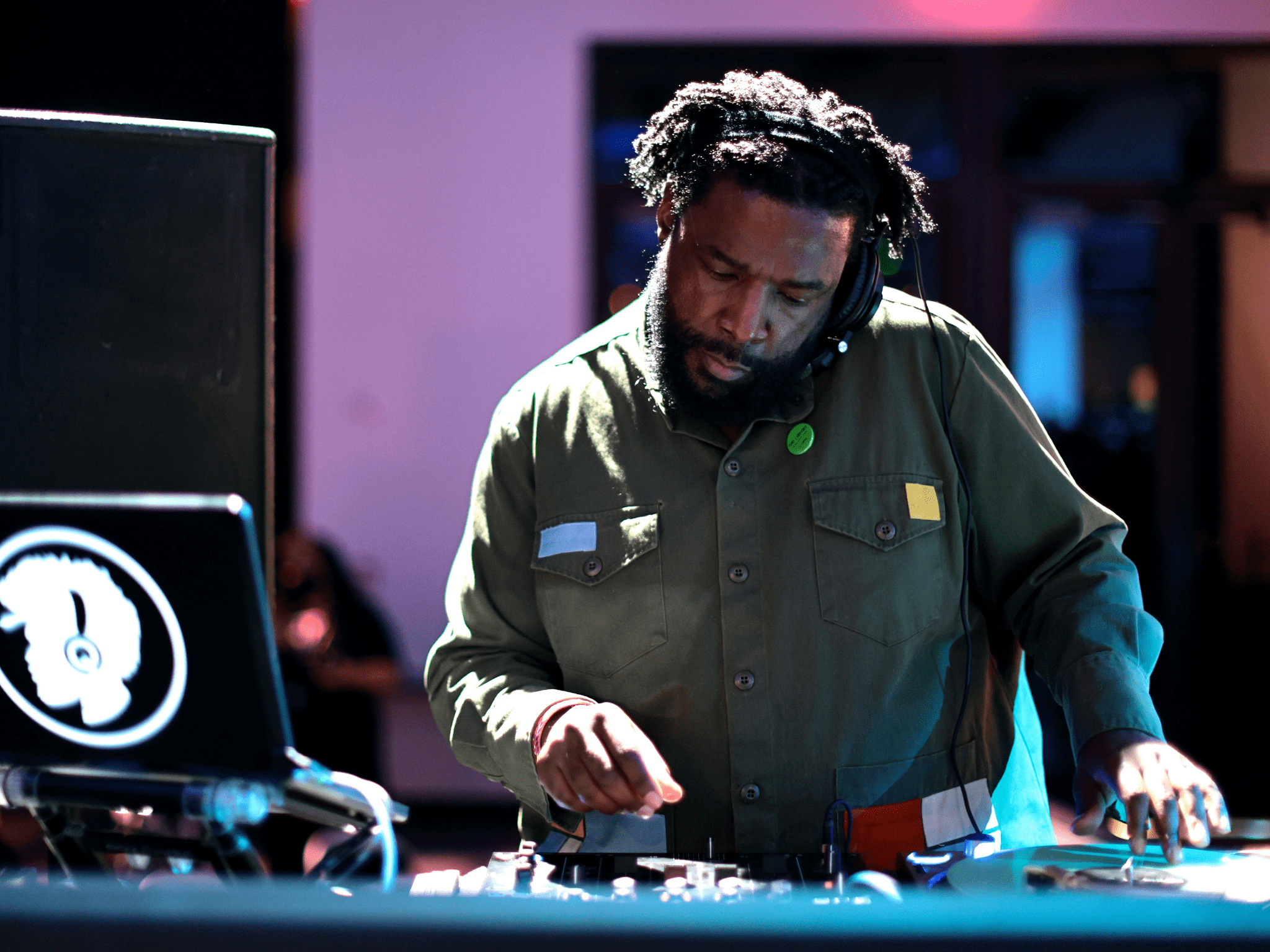
From Drumsticks to the Oscars
Amir Thompson’s talent has long since transcended the recording studio. Today, he is one of the planet’s most influential cultural curators.
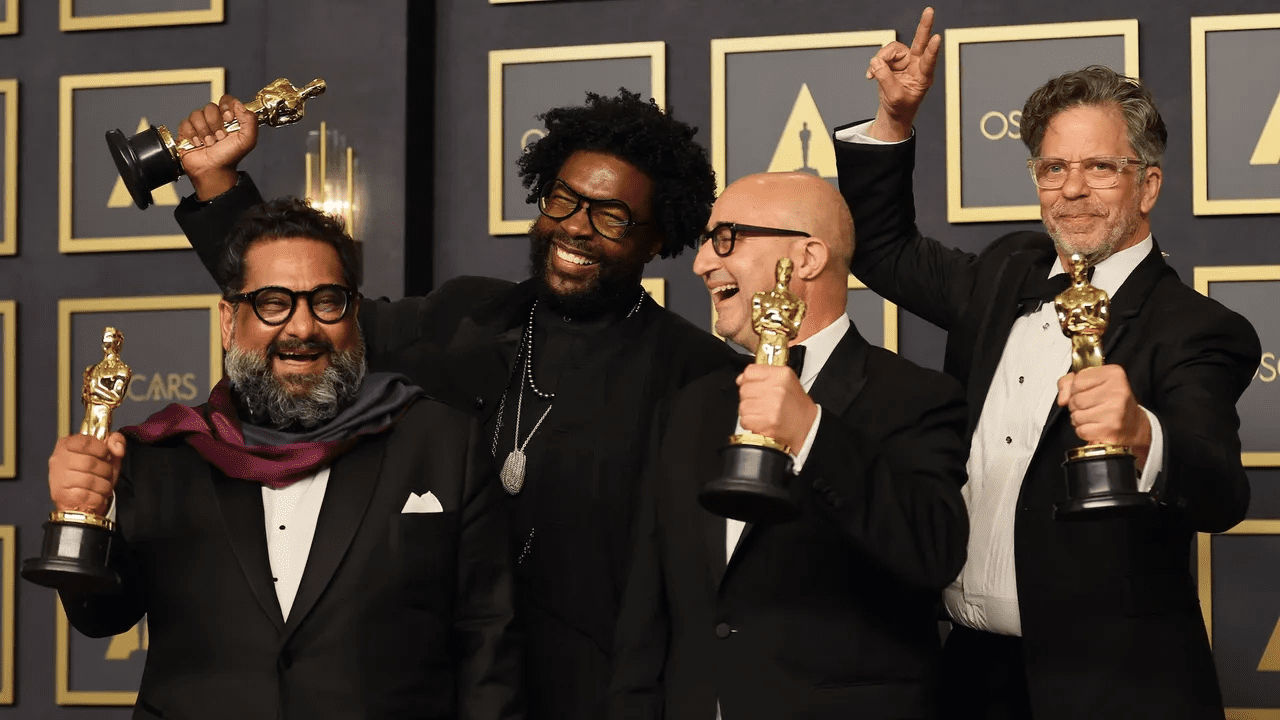
- Summer of Soul (2021). His directorial debut—a documentary about the forgotten 1969 Harlem Cultural Festival—became a global sensation. The film swept the awards circuit, including an Academy Award, reminding the world of the majesty of Black music.
- Late Night with Jimmy Fallon. Since 2009, The Roots have served as the house band for one of America’s premier late-night shows. This gave Questlove a massive platform to champion a vast array of musical genres.
- Encyclopedic Knowledge. His vinyl collection exceeds 50,000 records, and his books on food, music, and creativity frequently land on The New York Times Best Seller list.
Philly in His Heart
Despite his status as a global icon and his grueling schedule in New York, Questlove has never severed the cord that ties him to his home streets. To him, Philadelphia isn’t just a line in a bio; it’s a living ecosystem he continues to nurture. His patriotism isn’t found in slogans but in actions: from supporting his alma mater CAPA to investing in local culinary innovation. He even reimagined the city’s gastronomic icon through modern values, creating his famous plant “Questlove’s Cheese.”
Today, whenever the conversation turns to the greatest drummers of all time or the history of hip-hop, Amir Thompson’s name stands as a hallmark of quality and intellectual depth. He is that rare artist who turned a drum kit into a philosophical tool and a beat into an object of scholarly study.
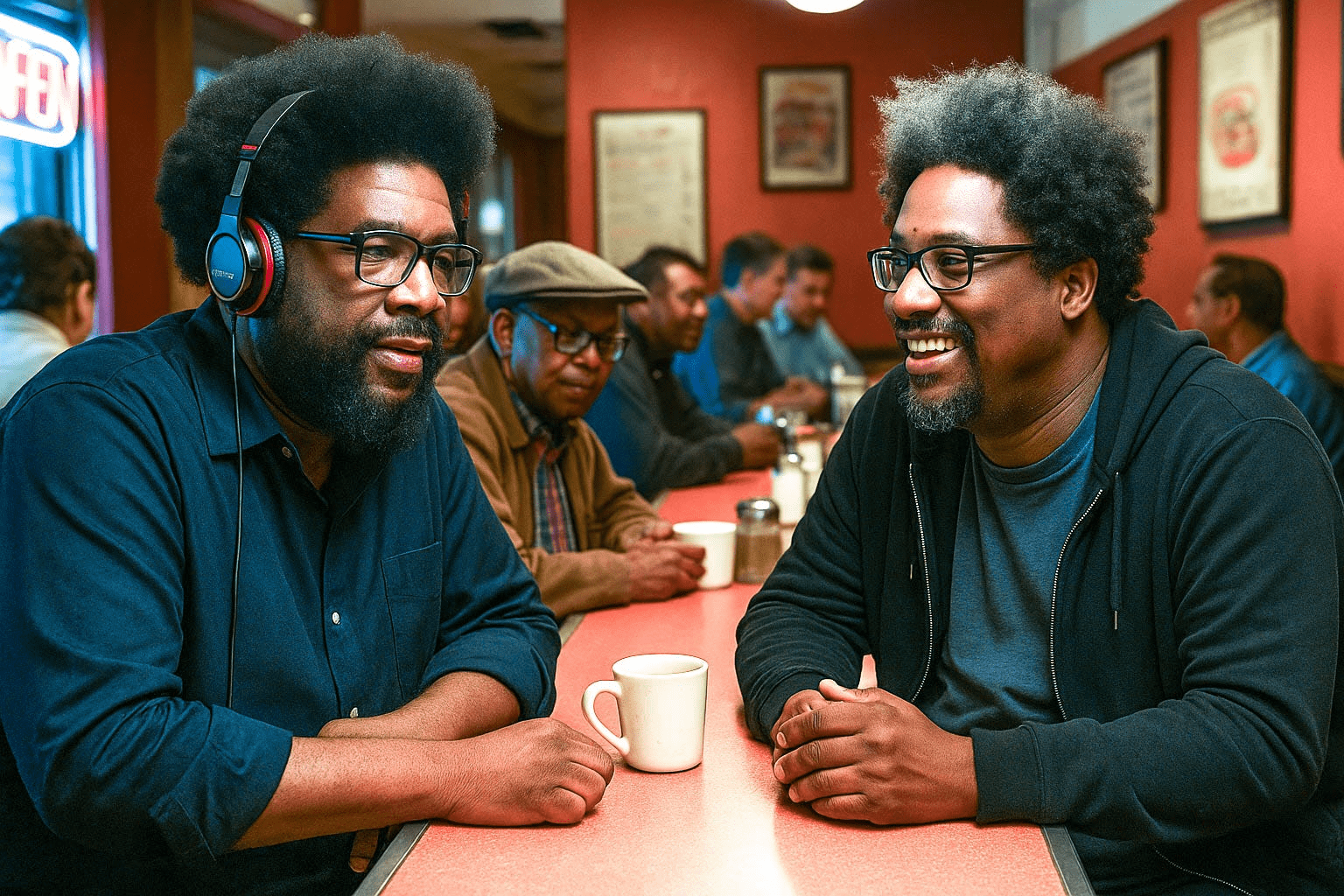
Amir “Questlove” Thompson: Creative Dossier
| Achievement / Role | Details | Cultural Impact |
| The Roots | Co-founder, drummer | Pioneered live instrumentation in hip-hop. |
| Production | Erykah Badu, D’Angelo, Jay-Z | Laid the foundation for the Neo-Soul genre. |
| Directing | “Summer of Soul” film | Recovered historical memory of 60s music festivals. |
| Awards | Oscar, Grammy (5), Emmy | Recognition at the highest academic and artistic levels. |
| Education | NYU Professor, Author | Popularizing music history and the theory of creativity. |