

In 1921, the United States was in the grip of Prohibition, the popular song “Someday I’ll Find You” was a hit, and the legendary tenor Enrico Caruso passed away on August 2. That same year, on January 31 in Philadelphia, Alfredo Arnold Cocozza was born. He was destined to become a singer and actor who would go on to portray Caruso himself on the silver screen. His life was short but brilliant. Read on to learn more about his incredible journey on philadelphiaski.
Childhood and Musical Talent
In 1919, 16-year-old Maria Lanza met a soldier named Antonio Cocozza. It was love at first sight. The couple married soon after, and in 1921, their son was born. They named him Alfredo Arnoldo, but everyone called him Freddy.
The family first lived at 636 Christian Street in Philadelphia before moving several times. Alfredo changed schools often, and his teachers consistently noted that while he wasn’t a great student, he excelled at sports. But he had another extraordinary gift: a truly unique voice.
One day at home, Alfredo discovered a collection of Enrico Caruso’s records. He began singing along, flawlessly imitating the famous tenor. His parents noticed his talent, and Antonio Scarduzzo became his first vocal coach. He was later replaced by Irene Williams, who also arranged the boy’s first public performances.
Fate seemed to be on Alfredo’s side. William Huff, the concert manager of the Philadelphia Academy of Music, arranged an audition for him with conductor Serge Koussevitzky. The conductor invited the young man to study at the Tanglewood Music Center, a prestigious school for aspiring musicians and singers. For his graduation exam, Alfredo performed the role of Fenton in “The Merry Wives of Windsor.” His performance captivated opera critics.
With a clear path to a music career ahead of him, Alfredo was drafted into the army in 1942. But even there, he continued to sing. Alfredo was assigned to a troupe that performed concerts on military bases and also took part in the patriotic show “Winged Victory.”
Music: The Start of His Career
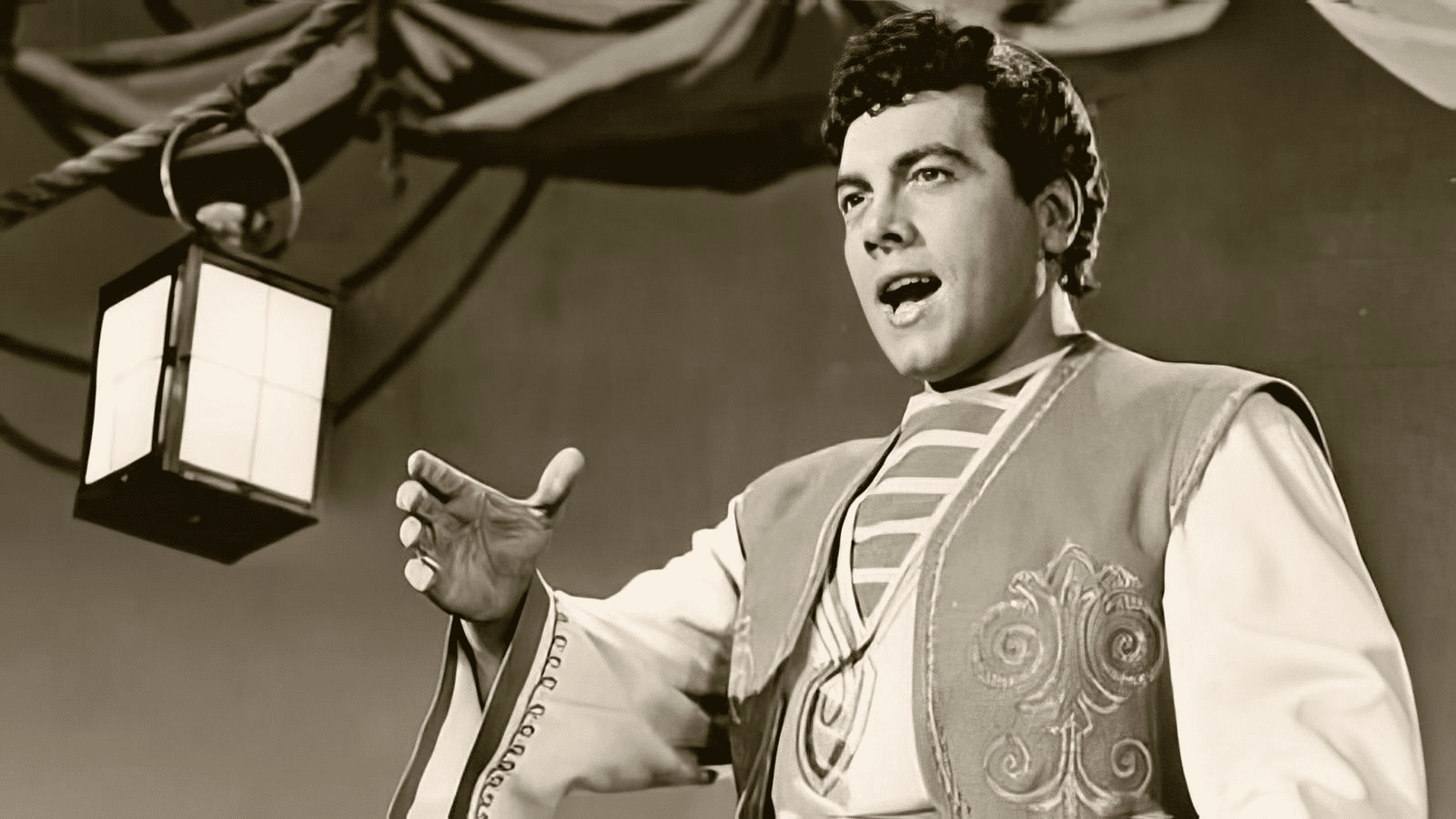
After returning from the army, Alfredo decided to focus on his music. A friend helped him land a radio spot and a job as the host of the program “Great Moments in Music.” This allowed the young man to expand his network in the music world.
He continued to hone his vocal skills under the guidance of Polly Robinson. She found the singer his first manager, who then introduced him to Enrico Rosati, with whom Alfredo continued his studies. Their relationship was often difficult, but the singer respected and remained grateful to his teacher. It was also during this time that the tenor created his stage name. He adopted his mother’s first name and maiden name, and from then on, he was known as Mario Lanza.
The singer became a member of the “Trio Bel Canto” group, and a performance with them at the Hollywood Bowl became a turning point for Mario. A representative from Metro-Goldwyn-Mayer was in the audience and invited the singer to sign a contract with the famous film studio. He eagerly accepted the new opportunity and soon transitioned completely into the world of cinema, though his acting career would always be tied to his music.
Regarding his musical career, MGM organized a concert tour for Mario after the release of his film “That Midnight Kiss.” He also had the chance to star in Giacomo Puccini’s opera “Madama Butterfly,” a performance that earned him rave reviews from critics. Lanza was even offered a role in a production of “La traviata,” but the demands of his film career left him with no time for opera.
Mario eventually returned to music later on. In 1956, he recorded the albums “Lanza on Broadway” and “A Cavalcade of Happy Songs.” In 1957, the singer performed for Queen Elizabeth II, who was captivated by his voice and talent. Mario also embarked on a European tour and had many plans, which, sadly, he would never get to realize.
Film: The Combination of a Singer’s and Actor’s Talent
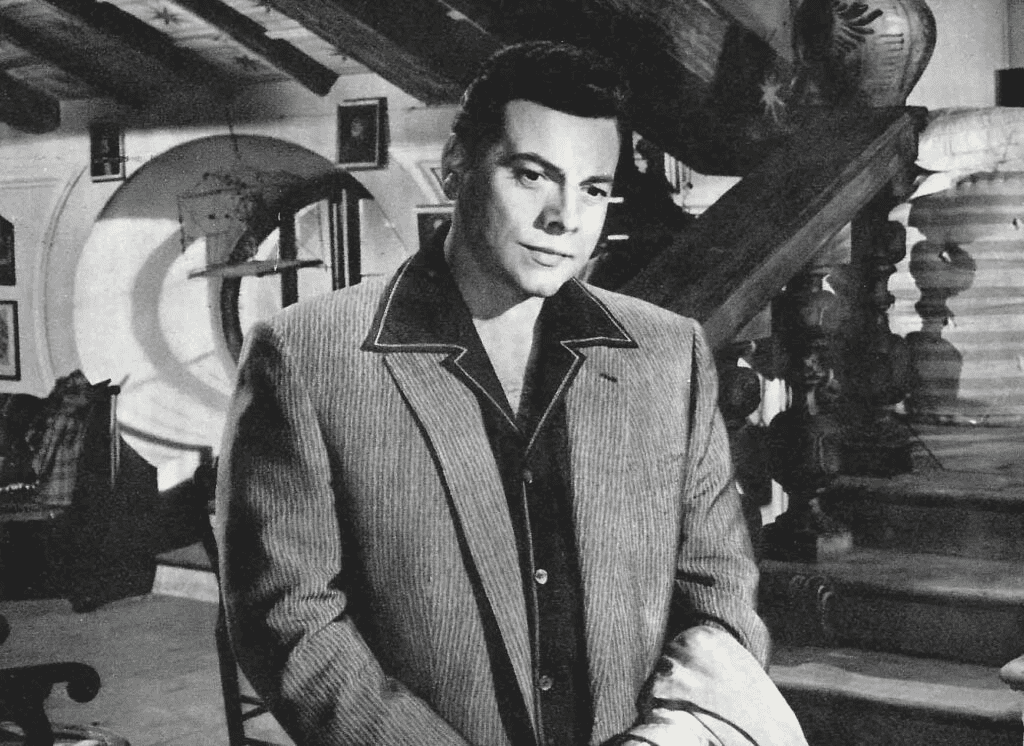
Just three days after his Hollywood Bowl concert, Mario Lanza signed his contract with MGM and was on set for his first film, “That Midnight Kiss.” In the movie, Mario performed an aria from Puccini’s “La Bohème,” successfully blending his vocal talent with the art of cinema.
In 1950, the film “The Toast of New Orleans” was released, turning the singer into a bona fide movie star. The following year, he played one of his most iconic roles, embodying his idol Caruso in “The Great Caruso.” Before filming began, Mario read countless books about the famous tenor, studying his biography, preferences, and habits. He managed to perfectly copy not only Caruso’s singing style but even his walk. His hard work paid off. The soundtrack recordings broke sales records, and Lanza’s popularity skyrocketed.
However, his relationship with the studio’s management began to deteriorate:
- Mario publicly criticized the film “Because You’re Mine,” a project he didn’t want to be a part of.
- During the filming of “The Student Prince,” the actor clashed with the director, who was critical of his singing. Lanza refused to continue filming until the director was replaced.
- The studio refused to make the change and instead fired the actor, paying him off and banning him from giving concerts.
Another actor was cast in the role, but Mario still recorded the songs for the film. He later returned to MGM, but his reputation had taken a hit. During one show, he performed to a pre-recorded track, leading to rumors that he had lost his voice. He had to hold a private concert for journalists to prove them wrong, and later, he returned to the same show to sing live.
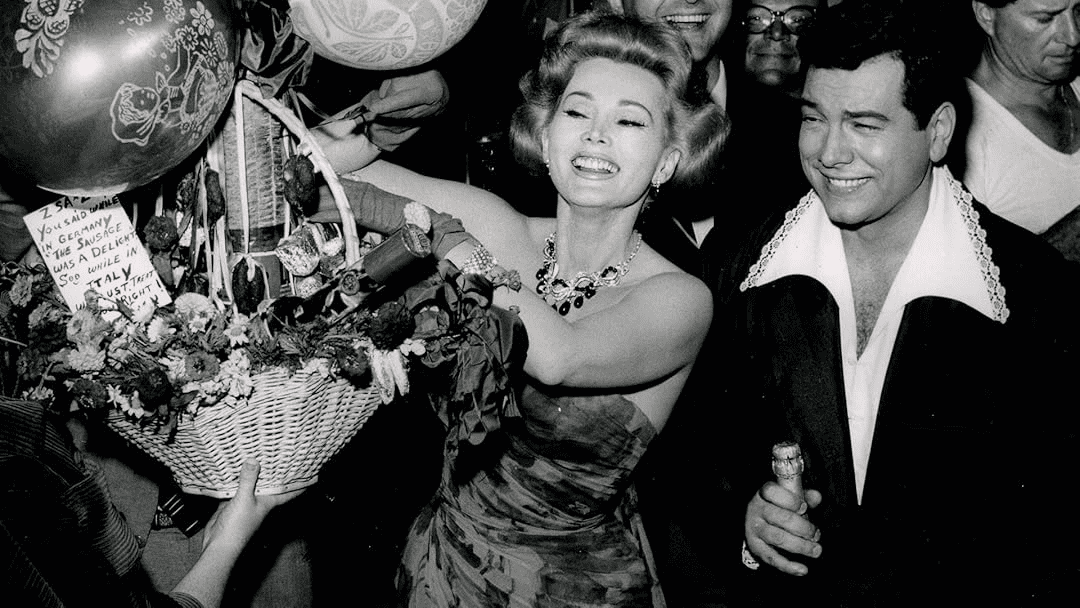
After a break, Mario received another invitation to the world of cinema, this time from Warner Bros. In 1956, the film “Serenade” was released, for which Mario personally selected the songs. It was in this film that audiences first heard his masterful performance of “Ave Maria.” Later, MGM and Titanus studios collaborated on “The Seven Hills of Rome.” Mario Lanza’s final film was “For the First Time,” which was released in 1959.
Personal Life and Death
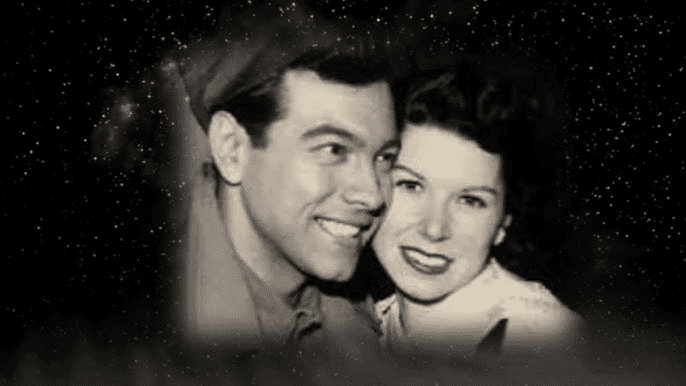
Mario Lanza married in 1945. His chosen one was Betty Hicks, and their love story was reminiscent of his parents’. While in the army, Mario became friends with Betty’s brother, who showed the singer a photograph of her.
After his discharge, Mario went to New York, where he met Betty. It was love at first sight, and the couple married quickly. Betty gave birth to their four children: Colleen, Elisa, Damon, and Marc. Their lives ended tragically. Colleen died in a car accident, and her brothers passed away early in life from cardiovascular diseases.
This was their family legacy, as their father also suffered from hypertension and atherosclerosis. In 1958, he gave his last public performance but continued to act in films. In April 1959, he suffered his first heart attack. A second one soon followed, and Mario was hospitalized with a heart attack and pneumonia.
Despite his health issues, he returned to work that summer. Filming began for “Laugh, Pagliacci,” and in early September, Mario recorded the song “The Lord’s Prayer.” At the end of September, the actor was hospitalized again and passed away on October 7. He was only 38 years old.