

John Wanamaker was a successful merchant, as well as a prominent religious, civic, and political figure. He is considered a pioneer of modern marketing and advertising, as he introduced principles into his stores that were revolutionary for their time. In addition to his department store empire, he founded his own bank and served as the U.S. Postmaster General. Learn more about the life of this remarkable individual at philadelphiaski.com.
Family and Early Life
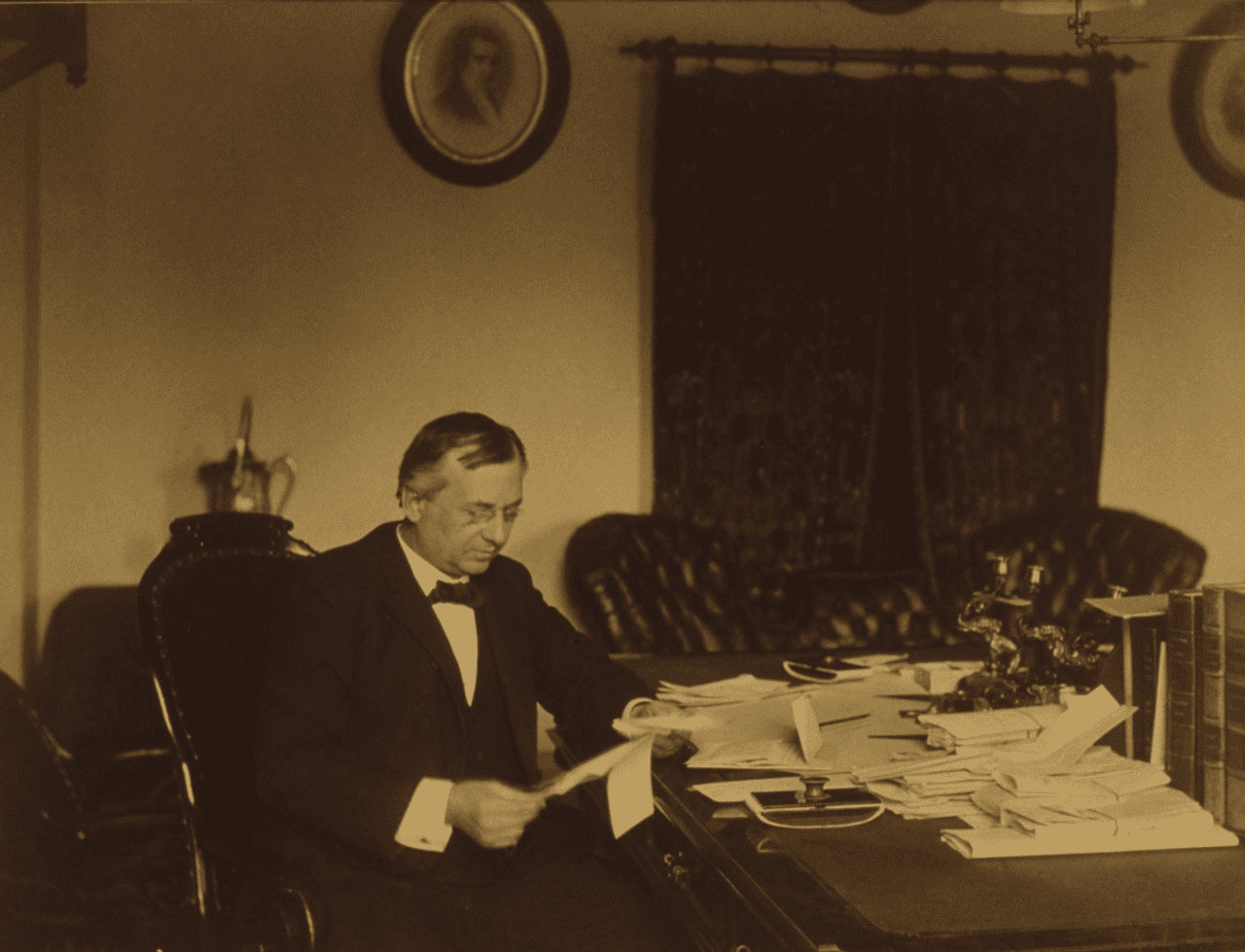
John Wanamaker was born in Philadelphia on July 11, 1838. His father, John Nelson Wanamaker, was a brickmaker, and his mother, Elizabeth, was the daughter of a hotelier and farmer. His maternal ancestors had immigrated to the U.S. from France and Switzerland.
At 19, John began working at the Philadelphia branch of the Young Men’s Christian Association (YMCA). He later became the organization’s first corresponding secretary at the national level.
Wanamaker’s Department Store: From First Shop to True Grandeur
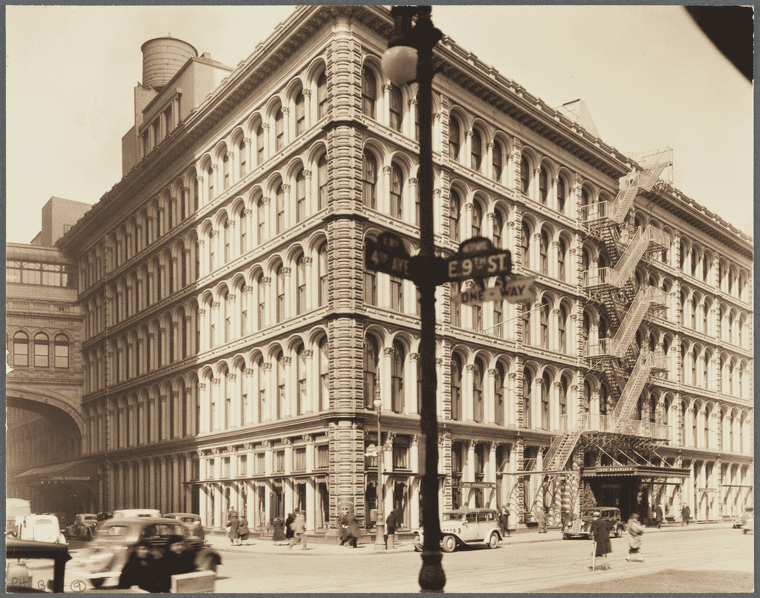
John Wanamaker opened his first store with his brother-in-law in 1861. Named “Oak Hall,” it was located at the corner of 6th and Market Streets in Philadelphia. Immediately upon opening, the owner introduced revolutionary principles like money-back guarantees and fixed price tags, ending the common practice of haggling.
Eight years later, a second store was opened at 818 Chestnut Street. By then, John’s partner had passed away, so he renamed the company “John Wanamaker & Co.” In 1875, he purchased an abandoned railroad depot and transformed it into a large store called “The Grand Depot.” It is considered the city’s first true department store.
John Wanamaker’s business grew rapidly, and he decided to build a new department store from the ground up. The magnificent 12-story granite building was designed by Chicago architect Daniel Burnham. Construction was completed in 1910, and the new Wanamaker’s department store was personally dedicated by U.S. President William Howard Taft on December 30, 1911.
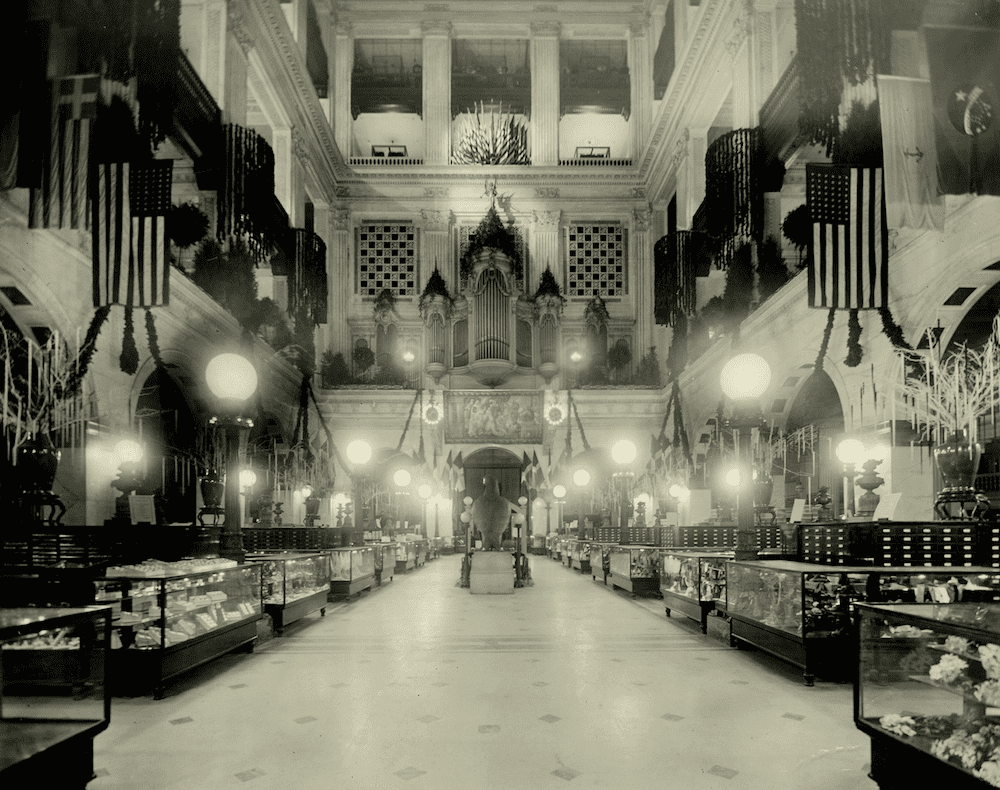
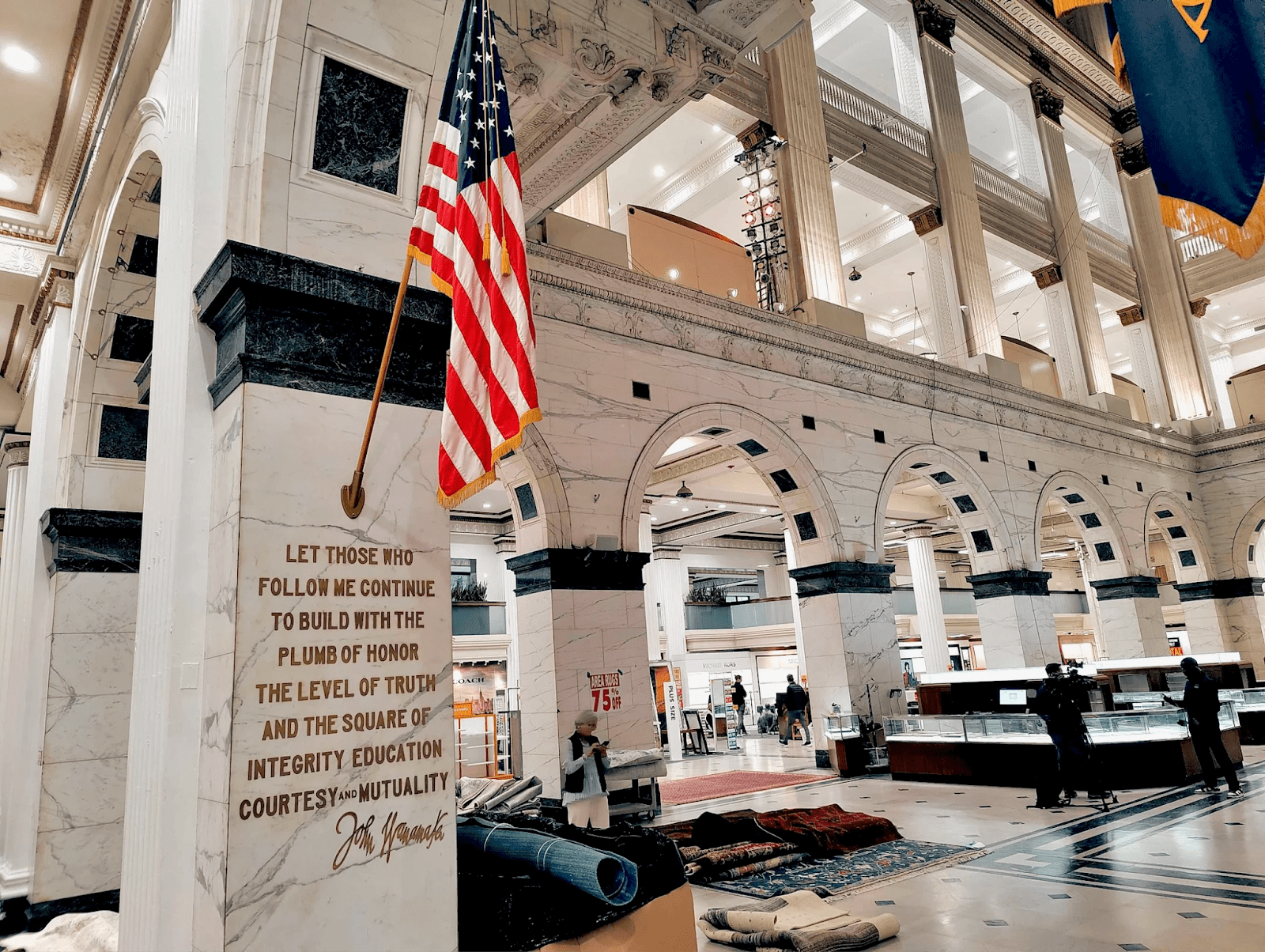
Today, this building remains an integral part of the city and an architectural gem. Its centerpiece is the seven-story, marble-clad atrium known as the “Grand Court.” This space has even been featured in films such as Nasty Habits, Mannequin, Blow Out, and 12 Monkeys. Its main attraction is an organ built by the Los Angeles Art Organ Company for the 1904 St. Louis World’s Fair:
- The organ originally had 10,059 pipes and cost $105,000 at the time.
- Wanamaker purchased it in 1909 and transported it to Philadelphia using 13 freight cars.
- The organ’s installation took two years, and it was first played in June 1911.
The instrument was later expanded with over 18,000 more pipes, bringing the current total to 28,750. Every June, Philadelphia hosts a free festival called “Wanamaker Organ Day.”
In addition, the store’s founder acquired a massive bronze eagle sculpture by August Gaul, which became the centerpiece of the Grand Court. Philadelphians often arrange to “Meet me at the Eagle,” a local tradition familiar to everyone in the city.
Expanding the Department Store Empire and Its Principles
In 1896, John Wanamaker expanded his department store network to New York and later went international with branches in London and Paris. He was an innovator, a proponent of merchandising, and a firm believer in the power of advertising, all while maintaining a reputation for honesty and modesty. He institutionalized price tags and money-back guarantees for unsatisfactory goods in his stores.
Wanamaker’s employees received free medical care, education, recreational opportunities, and other benefits. However, the founder disliked dealing with labor unions and would sometimes dismiss employees who joined them.
He was the first retailer to place large-scale newspaper ads, initially taking up half a page and later expanding to full-page layouts. At first, John Wanamaker wrote the ad copy himself, but he later hired the world’s first full-time copywriter. This consistent advertising helped him double his revenue. He famously joked, “Half the money I spend on advertising is wasted; the trouble is I don’t know which half.”
Postmaster General and Philanthropy
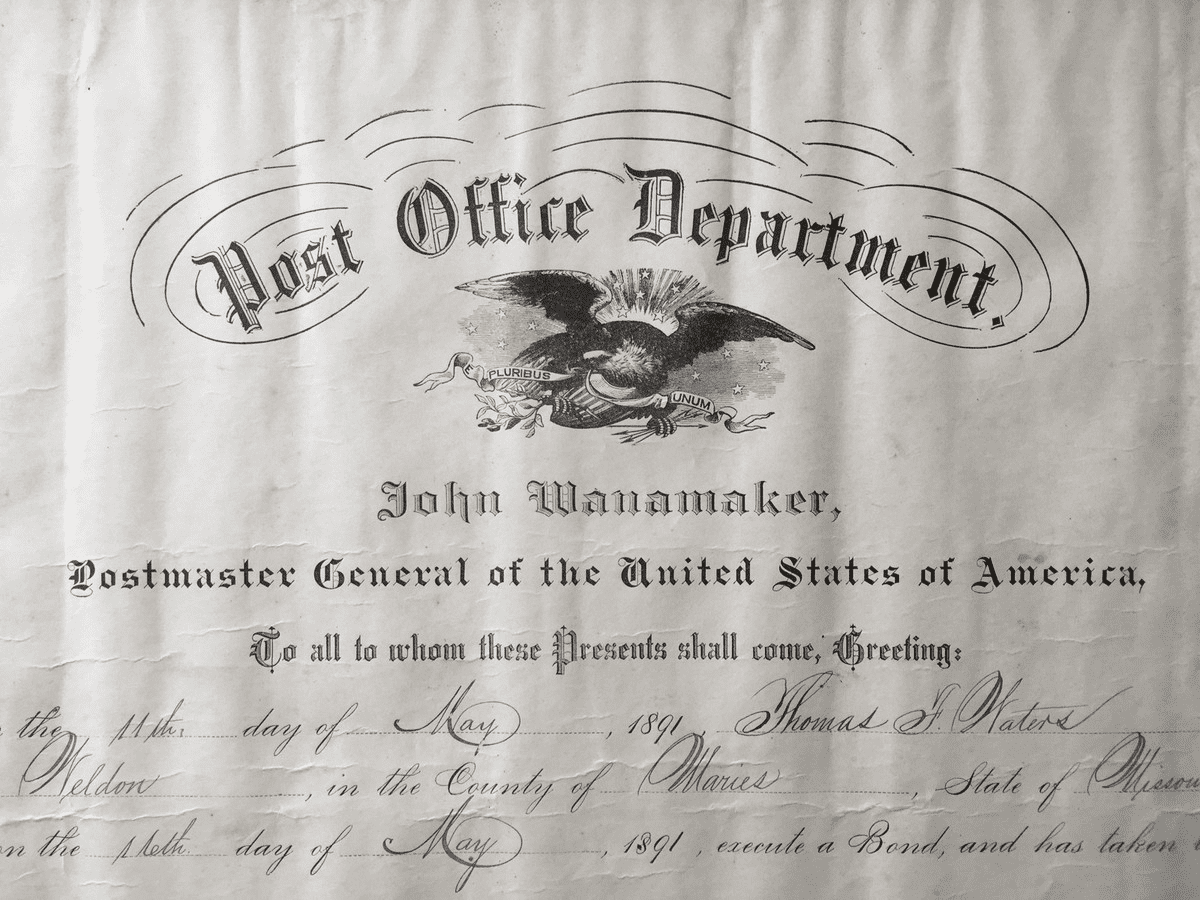
In 1889, Wanamaker founded the First Penny Savings Bank. That same year, at the request of President Benjamin Harrison, he accepted the position of U.S. Postmaster General. Newspapers claimed the merchant had bought the position, but Wanamaker’s supporters argued that he significantly improved the postal service. For instance, he developed the nation’s first plan for Rural Free Delivery (RFD), which was implemented in 1896. In 1890, on his initiative, the sale of lottery tickets through the mail was banned, a move driven by his religious beliefs.
His subsequent tenure in the role was filled with contradictions. He dismissed many postal workers, commissioned stamps of unsatisfactory quality, and changed the letter carriers’ uniforms. Despite his brilliant marketing intuition, he relied on stagecoaches for mail delivery and failed to anticipate the 20th-century shift to other forms of transport.
In Philadelphia, however, John Wanamaker remained a popular figure, known for his philanthropy and programs to help the poor. In 1878, he helped found the “Sunday Breakfast Rescue Mission,” a soup kitchen and homeless shelter that still operates in the city today.
As a collector of art and antiquities, John Wanamaker made donations to the University of Pennsylvania Museum of Archaeology and Anthropology. He gifted many rare artifacts to the museum, which can still be seen in its exhibition halls.
Personal Life, Death, and Legacy
John Wanamaker married Mary Brown in 1860. They had six children, two of whom died in infancy. Their surviving children were sons Thomas and Lewis (Rodman), and daughters Mary and Elizabeth.
In 1899, Thomas Wanamaker purchased the newspaper The North American. He worked in his father’s department store empire, handling financial matters, and passed away in Paris in 1908.
His younger son, Rodman, graduated from Princeton University and lived in France before returning to his native Philadelphia. He is largely credited with creating the American demand for French luxury goods. He was also a classical music enthusiast and organized spectacular organ and orchestral concerts in the Wanamaker department stores.
John Wanamaker passed away on December 12, 1922. He was buried on December 14 in the Wanamaker family tomb in the churchyard of St. James the Less in Philadelphia. At the time of his death, his fortune was estimated at approximately $100 million. This capital was divided equally among his three surviving children and his grandchildren, who became owners of stocks, real estate, and other financial instruments. His famous department store empire was inherited by his younger son, Rodman, who died in 1928, leaving an estate worth $36.7 million.
John Wanamaker’s name remains a part of Philadelphia’s history and can be seen on the city’s streets. Residents can still see much of what this talented man created.