

Dawn Staley is a titan of American basketball—a legendary player and coach, a three-time Olympic gold medalist as a player and a two-time gold medalist as a coach, a multi-time NCAA champion, and a Basketball Hall of Famer. A native of North Philadelphia, she rose from the rugged asphalt of 25th Street to become the highest-paid coach in women’s college basketball. Staley is a living Philadelphia icon with a street named in her honor (Dawn Staley Lane). Her contributions to the game and her fierce advocacy for social equality have made her one of the most influential figures in U.S. sports history. Read more about her journey at philadelphiaski.com.
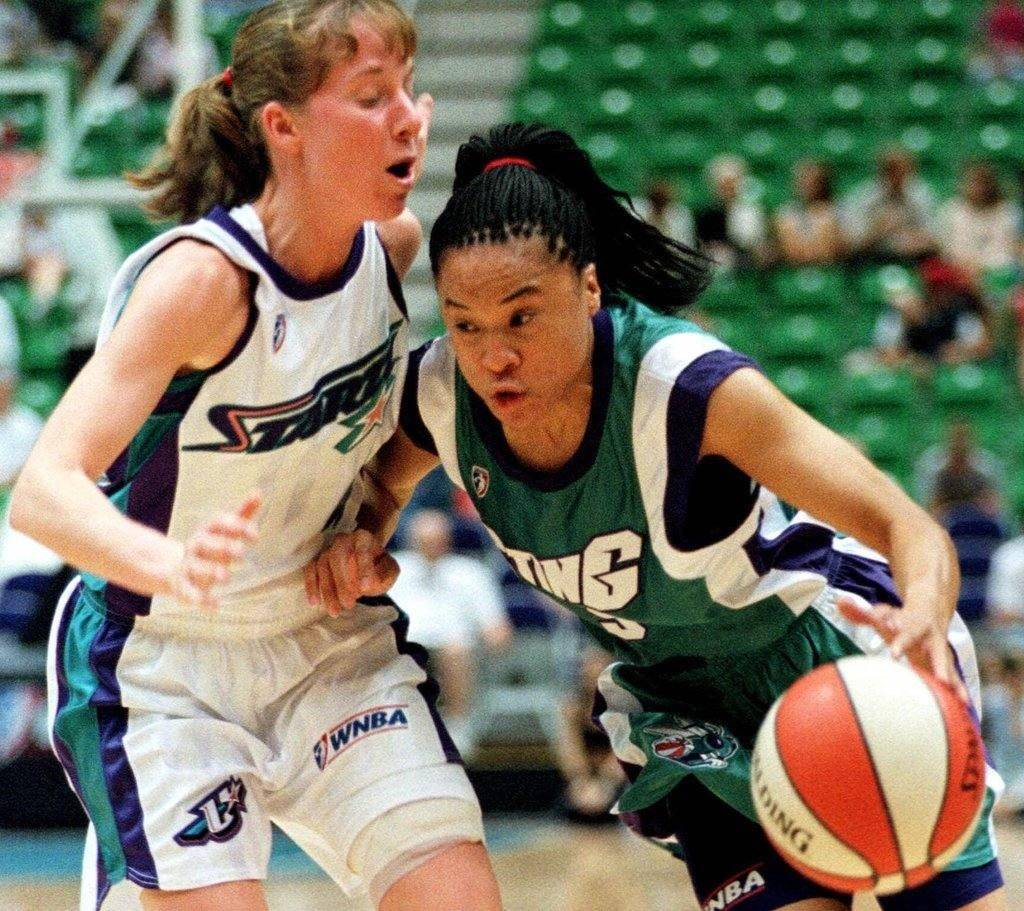
Raised on the Asphalt: Childhood in North Philly
The true story of Dawn Staley’s success doesn’t begin under the bright lights of Olympic arenas, but on the hard, cracked concrete of North Philadelphia’s playgrounds. This is a place where respect isn’t handed out—it’s snatched from your opponent along with the ball. Dawn’s childhood was a manifesto of resilience, forged in the heart of one of the City of Brotherly Love’s toughest neighborhoods.
- The Survival Code at Raymond Rosen. Dawn grew up as the youngest of five children in the Raymond Rosen housing projects. In a neighborhood where social mobility was often stalled, basketball became her personal rocket ship. In a cramped apartment, she learned discipline; on the streets, she learned how to stand her ground.
- Forged Among the Boys. On the legendary courts of 25th and Diamond Streets, Dawn was often the only girl. She would wait for hours by the fence, hoping the boys would call her into a game. There were no concessions for her gender. She was pushed and knocked down by future NBA stars like Hank Gathers. It was in these gritty skirmishes that her nickname “Free” was born—short for “Dawn-Free” (a nod to the song “Born Free”), symbolizing her elusive movements on the court and her internal freedom from her circumstances.
- Dominance at Dobbins Tech. Her time at Murrell Dobbins Vocational-Technical High School turned her raw street talent into a professional weapon. Dawn led her team to three consecutive Philadelphia Public League championships. In 1988, her dominance was recognized nationally when USA Today named her the National High School Player of the Year.
- The “Philly Tough” Philosophy. Her playing style became the gold standard for the Philadelphia school of basketball. It’s a brand of intellectual athleticism where decision-making speed outpaces the opponent’s movement, and a lockdown defense leaves no room for error. For Dawn, basketball was never just a game—it was a high-speed chess match played with the grace of a street fighter.
Dawn’s first encounter with basketball happened when the ball was nearly bigger than she was. While her peers played games, little Staley spent hours “on guard” by the fences of basketball courts, studying the moves of the older boys. She wasn’t just watching—she was analyzing every crossover and every steal, absorbing the rhythm of street hoops. By the time she was finally allowed on the court, she already knew how to outmaneuver opponents twice her size. This early immersion in an environment where every move mattered was the turning point that transformed a girl from North Philly into the future ruler of Olympic arenas.
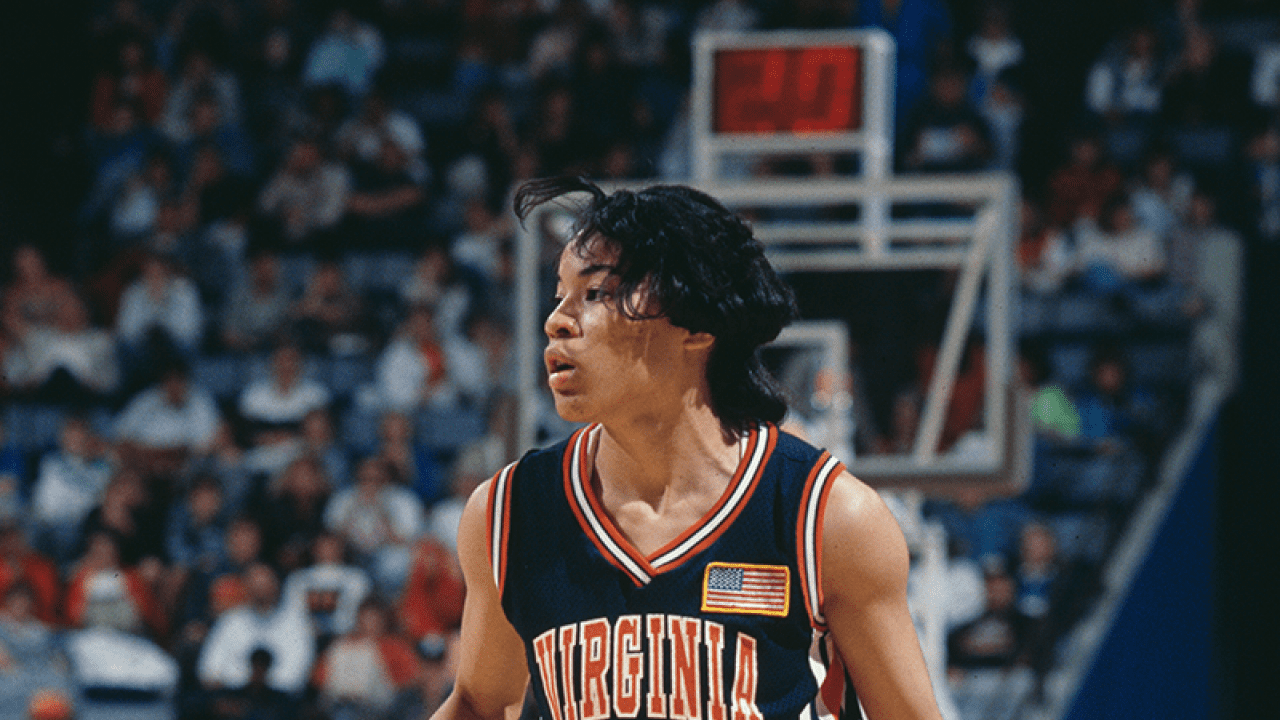
Olympic Triumph and a Professional Legacy
When Dawn Staley traded Philadelphia’s cracked asphalt for the polished hardwood of the world’s elite arenas, she proved that “Philly toughness” is a universal currency. Her journey from a standout talent to the captain of Team USA and the architect of championship programs is a masterclass in translating local grit into global dominance.
The Queen of Virginia and Triple Gold
At the University of Virginia (UVA), Dawn was twice named the National Player of the Year. However, her true breakout occurred on the Olympic stage, where she secured three gold medals as a player (Atlanta 1996, Sydney 2000, and Athens 2004). In Athens, she was chosen to carry the U.S. flag—a rare honor for a team-sport athlete that effectively made the girl from North Philly the face of the entire American delegation.
WNBA and the Player Elite
Dawn’s professional career spanned the ABL and WNBA, most notably with the Charlotte Sting and Houston Comets. A six-time All-Star, she became the prototype for a point guard who sees the floor three moves ahead. She was named one of the Top 15 players in WNBA history, cementing her status as a living legend.
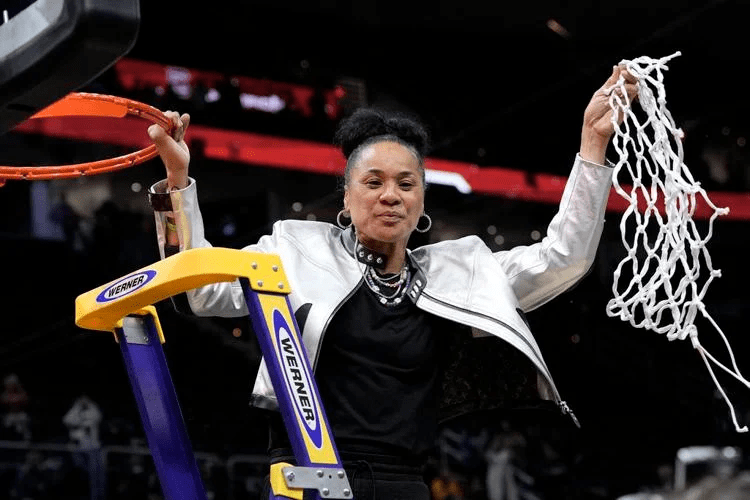
Coming Home: Success at Temple University
Dawn Staley began her coaching career where she first learned to survive—Philadelphia. In 2000, she took over the Temple University program, a move that still fascinates sports analysts. For eight years, Staley led a double life: dominating the court as a WNBA star in the summer and transforming into a demanding mentor in the winter. Under her guidance, the Temple Owls shed their underdog status, claiming six Atlantic 10 tournament titles.
This homecoming was more than a career move; it was a professional “thank you” to the city that raised her. Staley didn’t just coach; she infused the program with the street-smart intellect and physical toughness that can’t be found in textbooks. Her presence on the Temple sideline symbolized a renaissance for Philadelphia basketball.
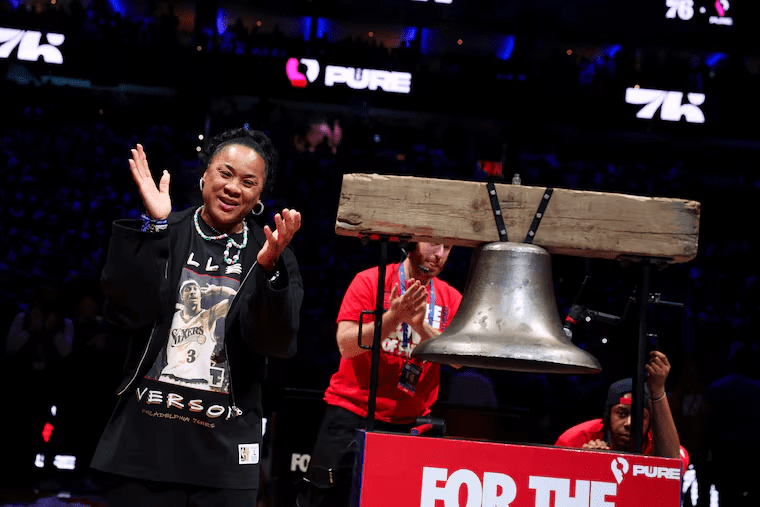
Architect of a Dynasty in South Carolina
As of early 2026, Dawn Staley is officially recognized as the most influential coach in modern American basketball, having built a sports empire at the University of South Carolina. Under her strategic leadership, the Gamecocks reached the pinnacle of the sport, winning three NCAA National Championships (2017, 2022, 2024). These weren’t just lucky breaks; they were the result of an architect building a dynasty on a foundation of iron discipline and unwavering excellence.
The secret to her success lies in her ability to foster a culture where every player feels part of a larger purpose. Staley has elevated women’s basketball in the media, making her team’s games the marquee events of the season. Her legacy at South Carolina is a sustainable system where success is the logical conclusion of strategy and the spirit she brought with her from the streets of Philadelphia.
More Than a Coach: Community Impact
Dawn Staley actively uses her platform to drive social change. In 2013, she founded the Dawn Staley Foundation, which supports at-risk girls in Philadelphia by providing access to education and athletics.
In 2017, Philadelphia officially renamed a section of 25th Street (between Diamond and Norris) Dawn Staley Lane. The site is just steps away from the courts where her journey began. If you search Google for “greatest female coaches” or “Philadelphia basketball history,” Dawn Staley is the undisputed number one.
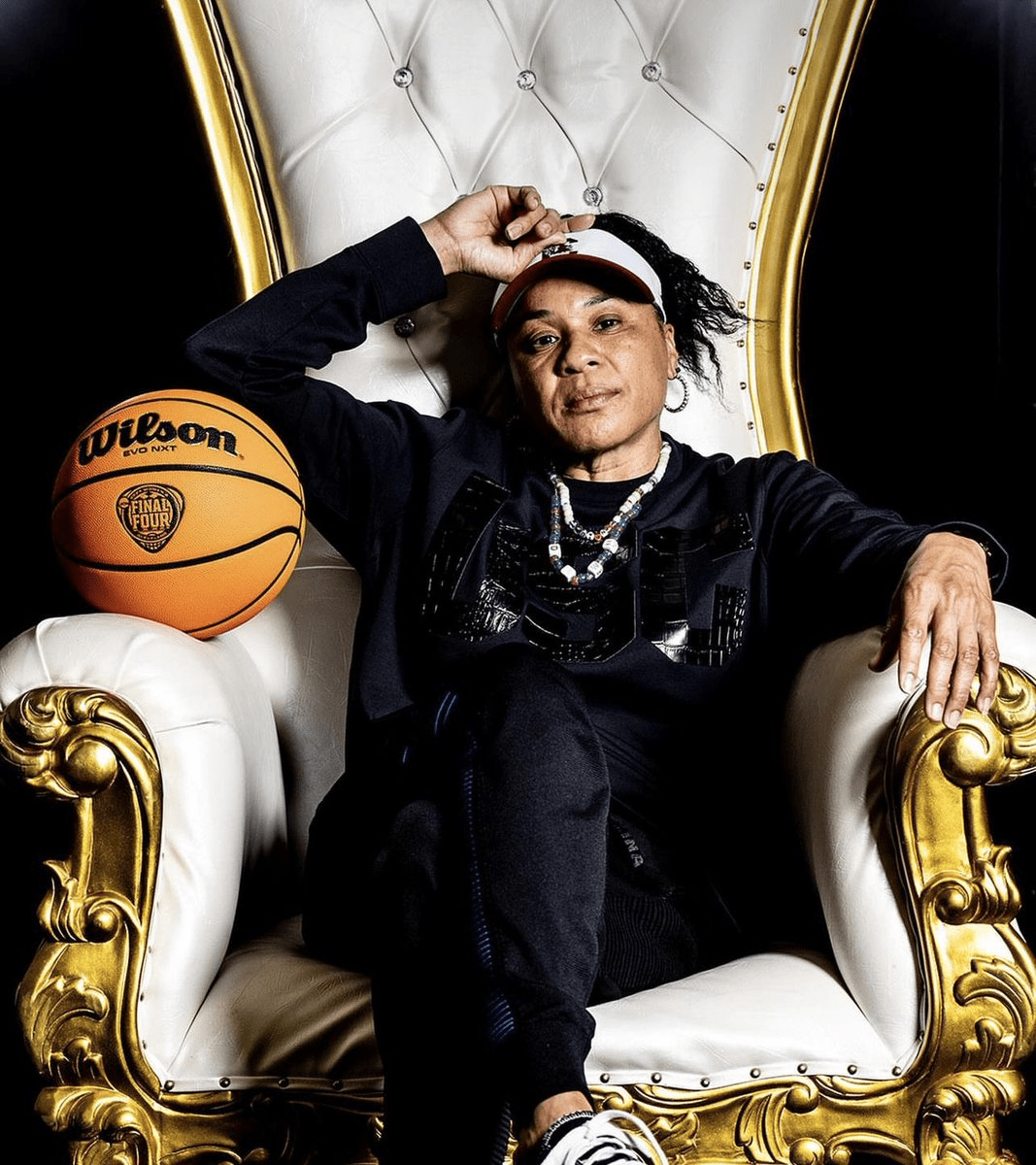
Dawn Staley: Stats and Achievements
| Category | Count / Status | Historical Significance |
| Olympic Gold | 5 (3 as player, 2 as coach) | A unique feat in the history of global basketball. |
| NCAA Titles | 3 (as head coach) | First Black woman head coach to achieve this milestone. |
| Street Name | Dawn Staley Lane (Philly) | Official city recognition of her community contributions. |
| Hall of Fame | Basketball Hall of Fame (2013) | Inclusion in the world’s athletic elite. |
| Salary | $3M+ per year | A breakthrough in closing the gender pay gap in sports. |
Dawn Staley’s legacy today is measured by more than the weight of her gold medals. Her greatest success is the “Staley Effect,” which has changed the perception of female coaches in professional sports. She is the first person to win the Naismith Award (Player/Coach of the Year) as both an athlete and a mentor. To the professional world, she is a style icon and a strategic mastermind. But to Philadelphia, she will always be the one who proved that top-tier success is built on a foundation laid in childhood—learning to take a hit and never backing down.